
TSLA's Cybercab: What Actually Stands Between It and Commercial Operation?

 Prefer us on Google
TSLA's own vice president told analysts on an earnings call that no further federal regulatory changes are needed to deploy Cybercab commercially. Weeks later, NHTSA confirmed to Reuters it was actively evaluating TSLA's Cybercab rollout. Both statements are true, and reconciling them requires understanding that "regulatory approval" for an autonomous vehicle isn't a single checkbox. It's a layered set of federal, state, and software level requirements, and TSLA's Cybercab has cleared some of them while others remain genuinely unresolved.
Sorting out where Cybercab actually stands means separating three different questions that get blended together in most coverage: what federal rules require, what individual states have or haven't authorized, and whether the underlying self driving software is actually ready, regardless of what any regulator says.
Why "No More Federal Approvals Needed" Isn't The Full Picture
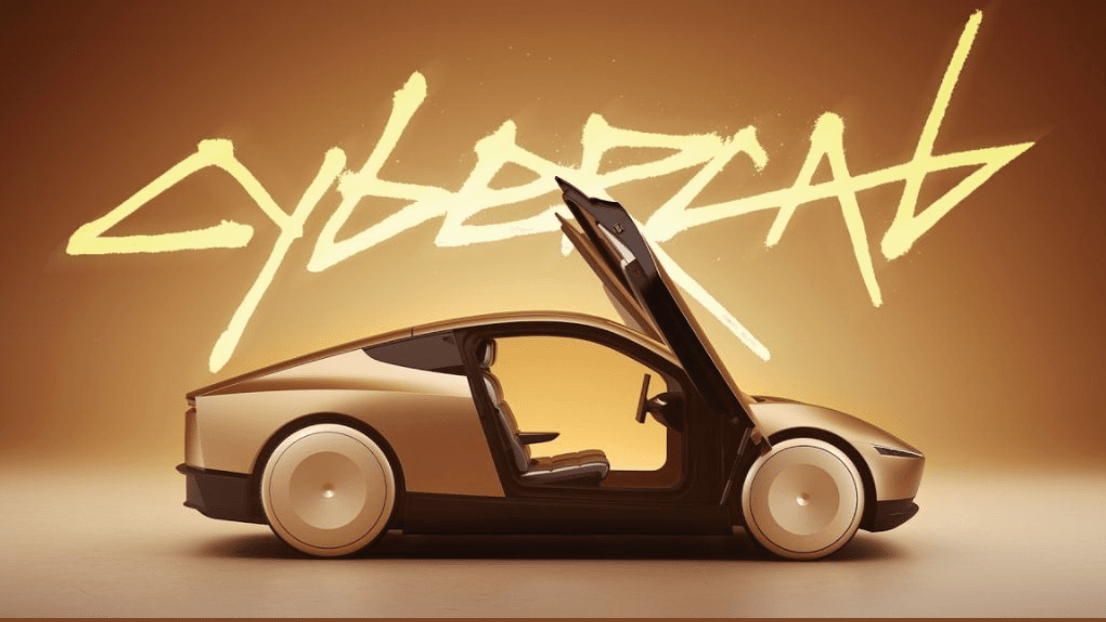
On Tesla's Q2 2026 earnings call, an analyst asked whether the company needed any additional federal regulatory changes to unlock Cybercab operations. Tesla's Lars Moravy answered directly: "Short answer, no," according to commentary captured and reported by Basenor. That statement rests on a specific technical strategy: rather than seeking an NHTSA exemption from standard vehicle safety rules, the way most steering wheel free robotaxi makers have historically had to, Tesla engineered Cybercab to self-certify directly against updated Federal Motor Vehicle Safety Standards, sidestepping the exemption process entirely and, with it, NHTSA's 2,500 vehicle annual production cap that applies to exemption vehicles.
That's a genuinely different regulatory path than the one other robotaxi makers have taken. Zoox, for comparison, pursued and received an actual NHTSA exemption covering up to 5,000 vehicles over two years, according to Axios, a process that required the agency to formally sign off on Zoox's design. Tesla's self certification approach means no single federal agency decision serves as a visible "approval" moment the way a formal exemption grant would. Tesla is asserting compliance rather than waiting for a regulator to confirm it, which is precisely why "no further approvals needed" and "still being evaluated" can both be accurate depending on which layer of the process you're looking at.
What Cybercab Has Actually Secured So Far
Some milestones here are concrete and verifiable. Cybercab received an EPA Certificate of Conformity for the 2026 model year, effective May 26, 2026, classifying it as a battery electric Zero Emission Vehicle, according to Teslarati's reporting. That certification confirms compliance with federal Clean Air Act emissions standards specifically, which is a genuine regulatory milestone, but one that addresses emissions, not autonomous operation or passenger safety approval.
On the specific brake-pedal question that had been one of the more concrete federal obstacles, NHTSA proposed updating FMVSS No. 135 in June 2026 to eliminate the manual brake pedal mandate for vehicles equipped with an automated driving system never intended to be human driven, according to Tparts' coverage, with public comments on that proposal open through July 27, 2026. That rule change, once finalized, directly supports Tesla's steering wheel free, pedal-free design rather than requiring Tesla to seek a one-off exemption for it.
Where Individual States Still Disagree
Federal rules are only one layer, and state-level authorization has produced a genuinely uneven picture. Nevada moved decisively in Tesla's favor: on August 20, 2026, the Nevada Transportation Authority voted to grant Clark County permits covering up to 5,000 Tesla vehicles alongside 1,000 each for Waymo and Uber, according to TechTimes, one of the largest commercial robotaxi fleet authorizations any US state has issued. Tesla's own Cybercab chief engineer, Eric Earley, told Nevada regulators the company's realistic one-year deployment target was closer to 2,500 vehicles rather than the full 5,000-vehicle ceiling.
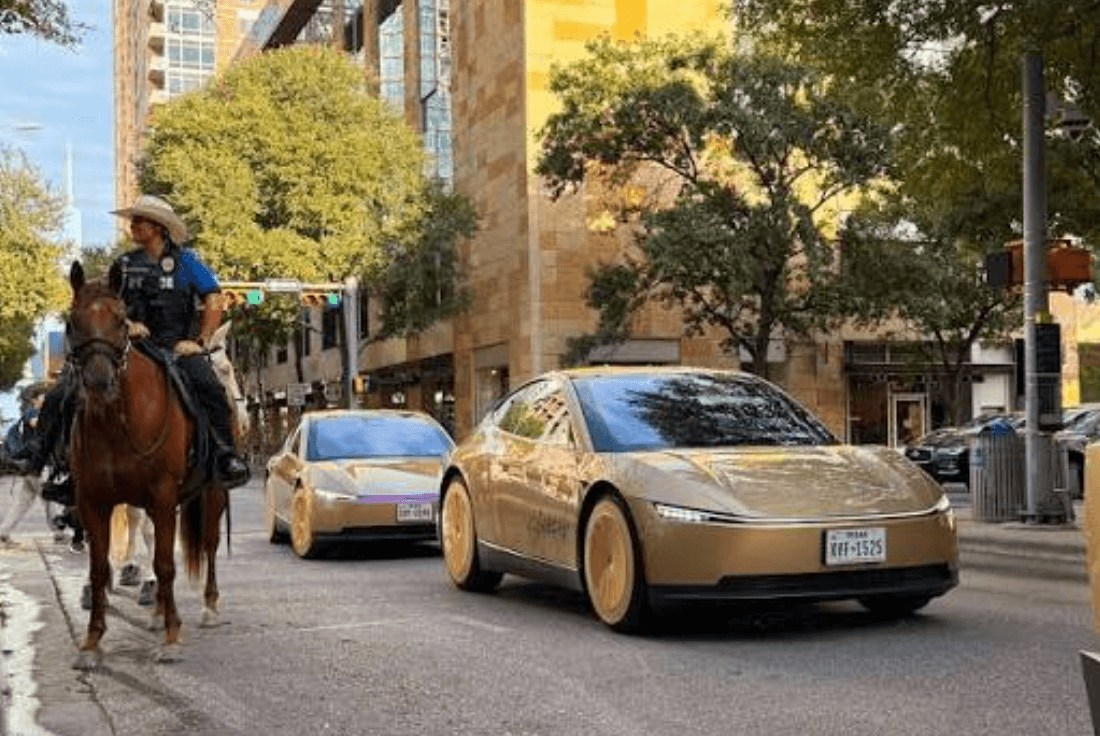
Texas presents a more ambiguous picture. The state requires active authorization for commercial autonomous vehicles operating without a human driver, and its registry shows Tesla Robotaxi LLC as an authorized entity, according to reporting from NXS Media Wire. But public records retrieved on August 23, 2026 showed Model Y entries specifically, without a distinct Cybercab authorization surfacing in that same registry, an open question the same reporting flagged as something Tesla and Texas's transportation department would need to clarify rather than something that had been definitively resolved either way.
California remains the most unresolved front. The state has not granted explicit regulatory approval for Cybercab commercial operations, even as the vehicle has reportedly been spotted testing on public roads without a safety driver present, according to TechTimes. That gap between visible testing activity and confirmed state authorization is flagged directly as a potential constraint on Tesla's broader national expansion timeline, since California represents one of the largest potential robotaxi markets in the country.
-- Price
The Software Bottleneck That Regulatory Approval Can't Solve
Even a fully resolved regulatory picture wouldn't answer the question that actually determines whether Cybercab can operate commercially at scale: whether Tesla's self-driving software is safe enough to run without supervision. On Tesla's own Q1 2026 earnings call, Musk told investors that safety validation, not regulation, was the limiting factor for Robotaxi expansion, and that the company was holding back broader deployment until a rewritten version of its software, FSD v15, arrives, a timeline he placed at the end of 2026 or early 2027, according to Electrek's reporting. On that same call, Musk acknowledged Robotaxi "likely will not see material revenue until at least 2027."
The safety data behind that caution is specific and concerning. Tesla's supervised robotaxi fleet has been crashing at roughly four times the rate of an average human driver, with a string of incidents reported to NHTSA in the Austin market specifically, according to Electrek. Separately, NHTSA's Engineering Analysis EA26002 found that Tesla's camera only perception system failed to detect certain roadway conditions that impaired camera visibility in nine incidents linked to the investigation, one of them fatal, and failed to issue driver alerts about degraded camera performance until immediately before the crash occurred in those cases, according to TechTimes. While Cybercab's software branch is technically separate from the consumer FSD system under that specific investigation, Tesla's v15 Robotaxi builds reportedly share the same underlying camera-only perception architecture, meaning the unresolved safety questions aren't fully walled off from Cybercab's own path to scale.
What NHTSA's Current Review Actually Signals
The most recent development complicates Tesla's "no further approvals needed" framing directly. A NHTSA spokesperson confirmed to Reuters, in reporting published within the past day, that the agency is in contact with Tesla and evaluating the Cybercab rollout, without offering further detail on the scope of that review, according to Auto Connected Car News. The same reporting noted that Tesla has not detailed whether Cybercab's design has cleared the federal safety requirements that would normally apply to a vehicle without manual controls, and that the company's launch approach has continued to lean on Texas's comparatively permissive testing framework rather than a fully documented, vehicle-specific federal sign-off.
This is the core tension worth sitting with. Tesla's self-certification strategy is legally structured to avoid needing a visible approval moment, which is precisely why an active federal review, even one without a defined scope yet, creates genuine uncertainty rather than routine process. A regulator confirming it's "evaluating" a self certified product is a materially different situation than a regulator confirming it has already reviewed and approved one.
What Would Actually Need To Happen For Nationwide Rollout
Rather than predicting how NHTSA's review resolves, it's more useful to lay out what a genuinely cleared path would actually require. NHTSA's evaluation of Cybercab would need to conclude without triggering a recall, a production halt, or a demand for a formal exemption filing, since any of those outcomes would directly contradict Tesla's self certification approach and force the company onto the slower, exemption-based path competitors like Zoox have already used. California would need to either grant explicit state authorization or clarify why ongoing testing has proceeded without one, closing the gap between visible on-road activity and confirmed regulatory status. And Texas would need to produce a documented Cybercab-specific authorization distinct from Tesla's existing Model Y robotaxi permit, resolving the ambiguity current public records show.
None of that addresses the deeper bottleneck Musk himself identified: FSD v15's safety validation, still targeted for late 2026 or early 2027 as of the most recent public timeline. Regulatory clarity at the federal and state level would remove one category of uncertainty. It would not, by itself, confirm that Tesla's underlying software is ready to operate a steering wheel free vehicle without supervision at the scale the $10 trillion robotaxi opportunity Tesla has described actually requires.
Trading TSLA Stock Through Cybercab's Layered Regulatory Timeline
Cybercab's path forward isn't one event, it's a sequence of separate checkpoints, NHTSA's undefined review, California's unresolved status, Texas's ambiguous Cybercab-specific authorization, and FSD v15's own safety validation timeline, each capable of moving the stock independently and on its own schedule. TSLA trades on WEEX Spot, letting you take a position with USDT funded from the same account used for broader crypto trading, without needing a traditional brokerage account to react each time one of those checkpoints actually resolves.
That structure matters specifically because, as this article lays out, "no further approvals needed" and "still being evaluated" can both be true depending on which layer of the process gets confirmed next, meaning the news flow here is likely to arrive in pieces rather than a single resolution. Having a low-friction way to size or adjust a position as each individual milestone, a state authorization, an NHTSA finding, a software timeline update, actually lands is more practical than committing everything based on where any one piece currently stands. Trading on WEEX is backed by a publicly disclosed 1,000 BTC protection fund, worth knowing for anyone holding a position in a stock where the real bottleneck, according to Tesla's own leadership, may be a software validation timeline rather than any single regulatory decision.
Conclusion
Cybercab's actual regulatory position sits between the two extremes usually presented in headlines. It's not fully cleared for nationwide commercial operation, given California's unresolved status, Texas's ambiguous Cybercab specific authorization, and NHTSA's active, undefined review. It's also not stuck waiting on a single blocked approval, given the EPA emissions certification already secured, Nevada's large-scale permit, and NHTSA's own proposed rule change addressing the brake-pedal requirement directly. The more consequential bottleneck may not be regulatory at all: Tesla's own leadership has pointed to FSD v15's safety validation, not government sign-off, as the actual limiting factor determining when Cybercab can scale, a timeline that remains unconfirmed regardless of how the current NHTSA review concludes.
FAQ
1. Does Cybercab need NHTSA approval to operate commercially?
Tesla's own VP stated in mid-2026 that no further federal regulatory changes were needed, based on Tesla's self-certification approach rather than seeking a formal NHTSA exemption. However, NHTSA has since confirmed it is actively evaluating Cybercab's rollout, without specifying the scope of that review.
2. Has Cybercab secured any confirmed federal approvals?
Yes. Cybercab received an EPA Certificate of Conformity for the 2026 model year in May 2026, confirming compliance with federal emissions standards, and NHTSA proposed a rule change addressing the brake-pedal requirement specifically for vehicles never intended to be human-driven.
3. Which states have approved Cybercab for commercial operation?
Nevada approved a large scale permit in August 2026 covering up to 5,000 Tesla vehicles. Texas shows Tesla Robotaxi LLC as an authorized entity, though a Cybercab-specific authorization hasn't clearly surfaced in public records. California has not granted explicit approval despite reported on-road testing.
4. What does Tesla say is actually limiting Cybercab's rollout?
Elon Musk stated on Tesla's Q1 2026 earnings call that safety validation of the company's FSD v15 software, not regulation, is the limiting factor, with that software targeted for release in late 2026 or early 2027.
5. Why is Tesla's supervised robotaxi crash rate relevant to Cybercab?
Tesla's supervised robotaxi fleet has been crashing at roughly four times the average human driver rate, and while Cybercab's software is technically a separate branch from the consumer FSD system under federal investigation, it reportedly shares the same camera-only perception architecture.
This content is provided for general informational purposes only and doesn't constitute financial, investment, legal, or tax advice. Any events, rewards, online promotions, or related information mentioned herein should not be considered a recommendation, solicitation, or invitation to purchase, sell, trade, or otherwise deal in any crypto assets. Crypto assets are highly volatile and may result in loss. The availability of WEEX services, products, and related events may vary by region. You are responsible for ensuring that your participation is in accordance with applicable local laws and regulations.
You may also like
Are Tokenized Stocks Backed by Real Shares? What Holders Own
Tokenized Stocks List 2026: Issuers, Sectors and What WEEX Lists
Tesla Roadster Performance, Thrust and Rocket Trims: Specs, Price and 2028 Production
Cybercab Launch: What It Means for TSLA and Tokenized TSLAX

TSLA vs SPCX: Musk's Two Public Companies Just Had Very Different Weeks
Tesla Stock Jumps Nearly 7% as Cybercab Launches: But Wall Street Is Already Warning of a Selloff
What Is United States Dividend Fund (USDF)? October Launch Claims and Token Identity Checks

How to Check Your WEEX Convert History: Convert Records and Spot Transactions
Why Did Pump.fun Partner With Kimchi? What the Deal Means for Traders
What Is Kimchi Crypto Trader’s Wallet Address? Public Records and Verification Guide
Which Cryptocurrencies Can You Convert on WEEX? How to Check Supported Assets
What Is Kimchi Crypto Trader’s Net Worth? Examining the $40 Million Claim

How to Trade Gold in Forex: What XAU/USD Is, How Pips and Lots Work and the Risks to Know
Should Your Crypto Cash Buffer Sit in WEEX Auto Earn? The Math
WEEX Convert Available Balance: How to Check and Use Max
How to Convert ETH to USDT on WEEX: Step-by-Step Guide
How to Convert USDT to BTC on WEEX: Step-by-Step Guide
How to Convert BTC to ETH on WEEX: Step-by-Step Guide
FTR Coin After the Roadster Hype: Why Flying Tesla Roadster Fell Back and What to Check Before Trading

Is Your Crypto Wallet Safe? How to Verify Security Alerts and Spot Phishing
How to Trade Gold in the USA: Futures, ETFs, Bullion and Tokens
Ethereum Funding Rate: How It Works and Why It Dropped Near Zero
Crypto Liquidation Heatmap: Reading the $972M Oct. 15 Long Flush
Margin Trading Crypto: Cross vs Isolated and Liquidation Math
SpaceX Q3 Earnings: 161% Growth, Tesla Merger Talk and SPCX Stock
How to Convert BTC to USDT: A Step-by-Step WEEX Guide
Flexible or Fixed Staking on WEEX? The Odds That Decide It
xStocks Crypto Explained: What Tokenized Stocks Are, How They Work and What Holders Should Check
BTC Funding Rate and Open Interest: What Each One Measures and How to Read Them Together

What Is Pearl (PRL) Crypto and How Does Its Mining Work?
Are Tokenized Stocks Backed by Real Shares? What Holders Own
Tokenized Stocks List 2026: Issuers, Sectors and What WEEX Lists
Tesla Roadster Performance, Thrust and Rocket Trims: Specs, Price and 2028 Production
Cybercab Launch: What It Means for TSLA and Tokenized TSLAX
TSLA vs SPCX: Musk's Two Public Companies Just Had Very Different Weeks
Tesla Stock Jumps Nearly 7% as Cybercab Launches: But Wall Street Is Already Warning of a Selloff
Contents
Popular coins
Latest articles


