
AAPL Under Ternus: What Apple's CEO Change Means for Traders

 Prefer us on Google


Apple changed chief executives on September 1, 2026, and the investment case did not change with it. John Ternus took over from Tim Cook, who moved to executive chairman rather than out the door — and AAPL's reaction, a 2.6% pop that had largely faded within 48 hours, says the market read it as continuity rather than rupture. The thing worth watching is not the handover. It is the September 9 product event, the unresolved Siri problem behind it, and — for anyone holding AAPL exposure through crypto rails — the fact that this catalyst calendar runs straight through weekends when the Nasdaq is closed and your market is not.
What changed on September 1, and how AAPL actually reacted
Ternus, who joined Apple's product design team in 2001 and ran hardware engineering as SVP from 2021, became CEO on September 1. Cook's 15-year run took Apple from roughly $350 billion to about $4.6 trillion in market value. The board approved the transition unanimously, and Apple announced it back in April — this was a scheduled handover, not a scramble.
The price action tracked that. On the April 20 announcement, AAPL closed at $273.05, up a little over 1%. On September 1, the day the change took effect, the stock touched an intraday high of $325.86 against the prior close of $316.85 — a 2.6% move on a session where the S&P 500 fell 0.4% and the Nasdaq fell 0.7%. Outperforming a red tape on your own leadership-change day is a vote of confidence.
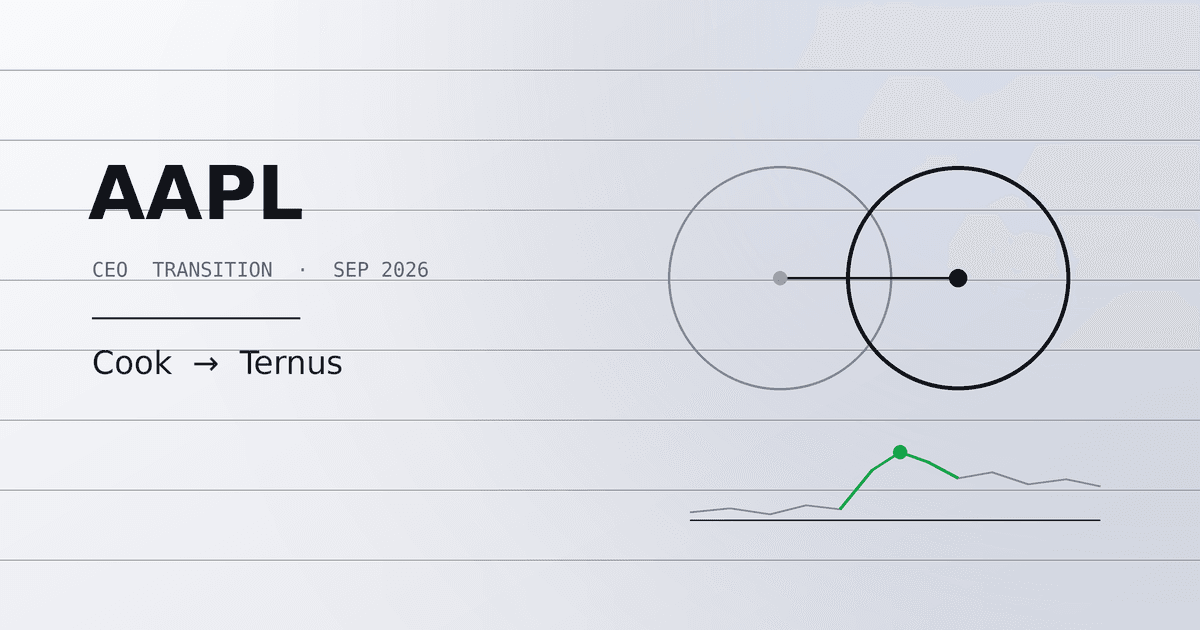
It did not hold. By September 3, WEEX's AAPL/USDT perpetual futures market was quoting 309.84 — well below the handover-day high. Perpetuals and spot equity are separate instruments and can diverge, so this is not a clean apples-to-apples read. But the direction is unambiguous: the succession premium was given back inside two sessions. That is what a market looks like when it has already priced an event and moved on to the next question.
The more important point is what Cook staying does to the risk profile. An executive chairman who spent 15 years building the supply chain and the policymaker relationships is a real backstop against the classic founder-succession discount. It also means the strategic direction is unlikely to turn sharply in the near term — which cuts both ways if you thought Apple needed a sharp turn.
Siri and the AI gap: The question that decides AAPL's next move
The succession was never the thesis risk. The AI position is.
Apple spent roughly three years trying to make Siri competitive while Google, OpenAI, and Samsung moved past it. Apple Intelligence launched to a cool reception, and early testing found responses still slower than rival assistants. Apple is now reported to be paying Google around $1 billion a year for access to a custom 1.2-trillion-parameter Gemini model — a company whose entire brand rests on owning its stack is renting the most strategically important layer of it.
That is the number that should shape how you think about AAPL over the next few quarters. The bear case is not that iPhone sales collapse; it is that Google's AI keeps winning the assistant and search interface layer, Apple's device becomes a commodity window onto someone else's intelligence, and the premium multiple compresses. Analysts have been direct about this — the biggest risk is Apple not getting the AI pivot right.
Ternus is a hardware engineer taking over a company whose central problem is software and models. That is either the wrong résumé for the moment or exactly the person who can make on-device AI a hardware advantage. Nobody knows yet, and anyone telling you they do is selling something.
Why the September 9 event is Ternus's first real test
Apple's "Surprise and Shine" event runs Wednesday, September 9 at 10:00 a.m. Pacific from Apple Park — Ternus's first launch as CEO. Expected: the iPhone 18 Pro and Pro Max, a foldable iPhone that may carry the Ultra name, and refreshed Apple Watch hardware. Pre-orders are expected around September 11–12, with devices shipping near September 19.
For AAPL, the event matters less for the hardware than for what Ternus says about AI. A foldable is a margin story; a credible on-device intelligence roadmap is a multiple story. Watch which one gets the stage time.
Practically, this is a dense two-week catalyst window: keynote, pre-order data, first reviews, then shipping. Each of those has historically moved the stock, and several of them land outside Nasdaq hours.
-- Price
Trading AAPL 24/7: Where tokenized markets break from the Nasdaq
This is where crypto-native AAPL exposure behaves differently from a brokerage position, and it is the part almost no succession coverage addresses.
Tokenized stocks and stock perpetuals trade continuously. The Nasdaq does not. When Apple news breaks on a Saturday — a review cycle turning, a pre-order figure leaking, a regulatory headline — tokenized and perpetual AAPL markets absorb it alone, with thinner liquidity and no reference price to anchor to. Three consequences follow, and they are worth internalizing before September 9 rather than after:
- Weekend gaps are wider and slower to correct. Arbitrageurs normally keep on-chain AAPL close to the underlying by trading against the real shares. With the equity market shut, that hedge is unavailable, so premiums and discounts open up and can persist until Monday's open.
- Funding is a running cost, not a rounding error. WEEX's AAPL perpetual settles funding on an 8-hour cycle. Hold a leveraged directional position through a two-week catalyst window and funding compounds against you if the crowd is positioned the same way — which, into a hyped product event, it usually is.
- A perpetual is not ownership. No dividend, no vote, no share. You are trading the price, and with leverage available up to 100×, a 3% adverse move on high leverage is a liquidation, not a drawdown. The tokenized Apple (AAPL) coin explainer is worth reading before you assume the two instruments behave alike.
What traders usually miss: the damage in event-driven equity trades on crypto rails rarely comes from being wrong about direction. It comes from being right too early, carrying leverage across a weekend at elevated funding, and getting liquidated on a thin Saturday wick before the Monday open confirms the thesis. Position sizing is the fix, not conviction. If you are trading this window, size for the gap you cannot hedge — WEEX's guide to risk management tools covers stop placement, isolated margin, and sizing rules that matter more than usual here.
What matters most for AAPL from here
Rank the three variables honestly. The CEO change is the least important — it was announced in April, executed on schedule, and the man who ran the company for 15 years is still in the building. The September 9 event is next, mostly as a signal of where Ternus points the company. The AI gap is the one that actually decides where AAPL trades in a year, because it is the only one of the three that can move the multiple rather than the quarter.
For traders accessing AAPL through crypto markets, add a fourth variable that the equity crowd never has to think about: your market stays open when theirs closes. That is genuine optionality when news breaks on a Sunday, and a genuine hazard when you are leveraged into it. Know which one you are set up for before the keynote.
FAQ
1. Did AAPL go up or down when Ternus became CEO?
Up, briefly. AAPL rose 2.6% intraday on September 1, 2026, hitting $325.86 against a prior close of $316.85, while the broader market fell. The gain largely faded over the following sessions.
2. Is Tim Cook still involved with Apple?
Yes. Cook became executive chairman of the board rather than leaving the company, and continues to work on select areas including engagement with policymakers globally.
3. What is the biggest risk to AAPL under the new CEO?
Artificial intelligence, not leadership. Apple's assistant lags rivals, and it is reported to be paying Google roughly $1 billion annually for a custom Gemini model to fill the gap. If Apple does not close that gap, the risk is multiple compression rather than a collapse in device sales.
4. When is Apple's next event, and does it matter for the stock?
Apple's "Surprise and Shine" event is September 9, 2026, at 10:00 a.m. Pacific — Ternus's first as CEO. It matters mainly for what it reveals about Apple's AI roadmap; hardware alone rarely re-rates the stock.
5. How is trading tokenized AAPL different from buying Apple shares?
Tokenized AAPL and AAPL perpetuals trade around the clock and give price exposure only — no dividend, no shareholder vote, no underlying share. They also carry funding costs, leverage risk, and wider spreads when the Nasdaq is closed.
6. Why do tokenized AAPL prices drift from the real Apple stock price?
Because arbitrage between the token and the underlying share depends on the equity market being open. Outside Nasdaq hours, that hedge is unavailable, so premiums or discounts can open up and take until the next session to close.
Risk Warning
Trading AAPL exposure through tokenized assets or perpetual futures carries substantial risk, and you may lose part or all of your capital. Perpetual futures on WEEX offer leverage up to 100×, which magnifies losses as much as gains — a small adverse move against a highly leveraged position can trigger liquidation. Because tokenized equity markets trade 24/7 while the Nasdaq does not, weekend and holiday liquidity is thinner, spreads widen, and prices can gap away from the underlying share price with no immediate arbitrage available to correct them. Funding payments on perpetual positions accrue every eight hours and can materially erode returns over a multi-week catalyst window. A tokenized stock or perpetual is not ownership of Apple stock: it confers no dividend, no voting right, and no claim on the company. Availability of tokenized equity products is restricted in some jurisdictions, including the United States. Market data cited here is accurate as of September 3, 2026 and changes continuously. Nothing here is investment advice — assess your own objectives and risk tolerance, and never commit capital you cannot afford to lose.
This content is provided for general informational purposes only and doesn't constitute financial, investment, legal, or tax advice. Any events, rewards, online promotions, or related information mentioned herein should not be considered a recommendation, solicitation, or invitation to purchase, sell, trade, or otherwise deal in any crypto assets. Crypto assets are highly volatile and may result in loss. The availability of WEEX services, products, and related events may vary by region. You are responsible for ensuring that your participation is in accordance with applicable local laws and regulations.
You may also like
Is Bitget Leaving Russia? What Account Holders Should Check
Cyberleek Token Risks: Memecoins Tied to Leaks, Anonymous Wallets and Why Verification Matters
Anonymous Crypto Wallet: What Each One Hides and Where It Fails
What Is Blockchain and How Does It Work? One Real Payment Traced
How to Buy New Crypto Before Listing: 5 Routes and Their Traps
WEEX API Key Setup: How to Connect a Third-Party Platform Safely
WEEX Broker Models: Strategy Bots, Copy Trading and Sub-Exchanges
What Is Artificial Superintelligence Alliance (FET) Crypto? The ASI Token, Migration Status, and Real-World Demand Test
Best Crypto Wallet App in 2026: How to Choose Between Hot, Cold, Custodial, and Web3 Wallets
RSI Indicator Settings: What 7, 9, 14 and 21 Did on BTC Charts
Ethereum 2030 Roadmap: Vitalik's Cryptographic World Computer
Best Decentralized Crypto Wallet for Beginners: What Self-Custody Really Asks of You
Best Crypto App for Beginners: Exchange App, Wallet App, or Both?
QNT Futures: Funding Rate and Long vs Short After a 4x Rally
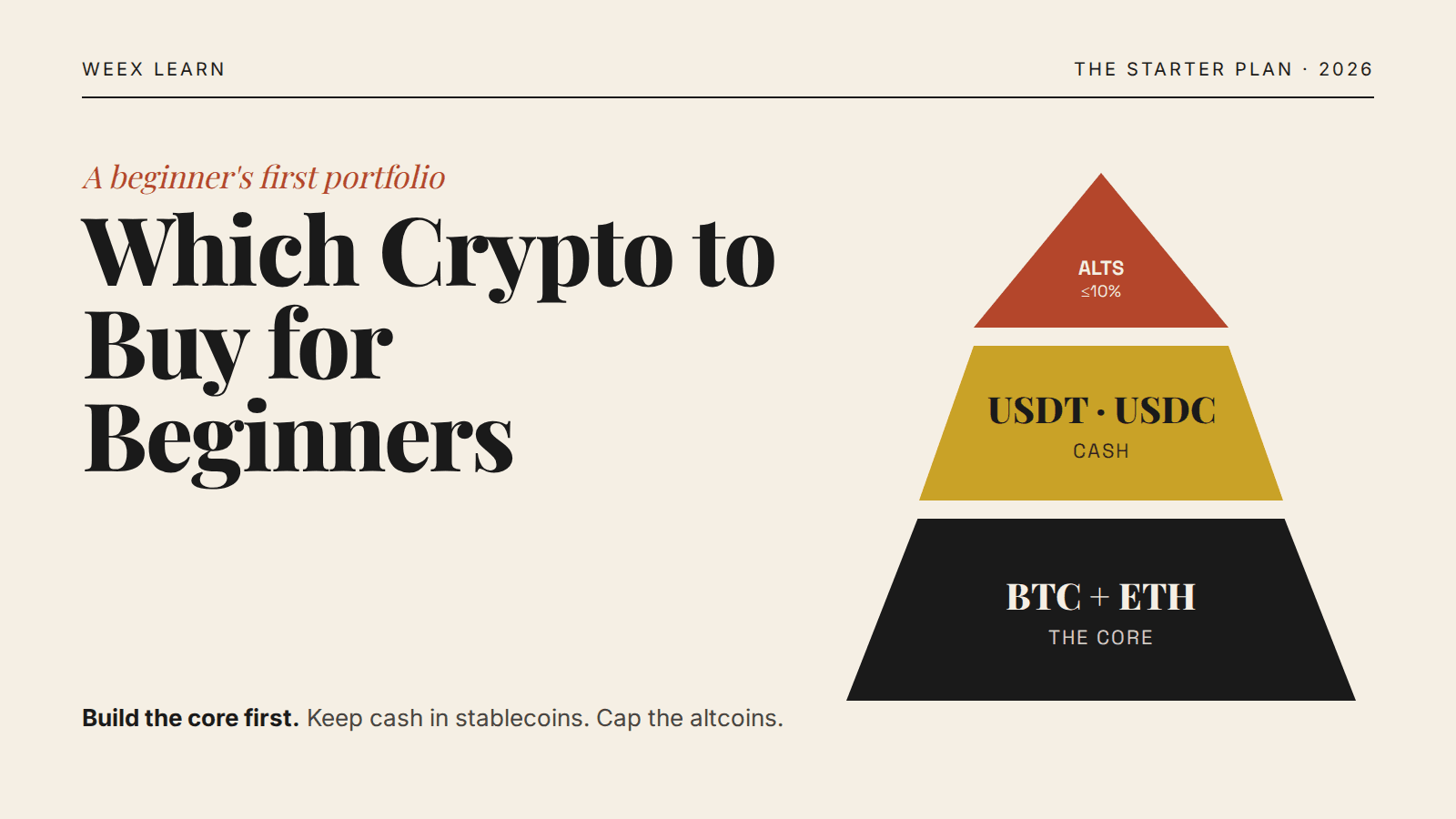
Which Crypto to Buy for Beginners: A Simple 3-Tier Starter Plan

Taiwan's Travel Rule Amendment Published: What Domestic Crypto Transfers Will Require
WEEX Futures Trading: What 400x Leverage Really Costs You
Is Hyperliquid Safe? Risks You Should Know Before You Trade
What Is Hyperliquid? A Complete Guide to the Perpetuals Exchange
What Is Pi Network? A Complete Beginner's Guide
What Is a Funding Rate? How Perpetual Futures Charge Longs and Shorts
Lighter (LIT) Futures: Cross vs Isolated Margin on a 17% Range
XRP Futures: How to Long or Short XRP After the Clarity Act Vote
What Is ZCAT and Is It Worth Buying? Anonymous Cat (ZCAT) Guide for 2026

MU Stock Reclaims $1,000 Again: What's Actually Different This Time
GPT-6 Astra and Crypto: The AI Token Bid and the Cyber Risk
StonkFun Just Became Solana's Hottest Launchpad: STONK Surges 250% to Prove It
What Is Tangem Wallet? A Complete Beginner's Guide
PONS Robinhood Chain Token: What the Buyback Rally Rests On
Cathie Wood’s $50 Million Crypto Stock Bet Explained: What Did ARK Invest Buy?
Is Bitget Leaving Russia? What Account Holders Should Check
Cyberleek Token Risks: Memecoins Tied to Leaks, Anonymous Wallets and Why Verification Matters
Anonymous Crypto Wallet: What Each One Hides and Where It Fails
What Is Blockchain and How Does It Work? One Real Payment Traced
How to Buy New Crypto Before Listing: 5 Routes and Their Traps
WEEX API Key Setup: How to Connect a Third-Party Platform Safely




