
OCC Finalizes Stablecoin Issuance Guidelines in the U.S.

 Prefer us on Google



On October 21, 2026, the Office of the Comptroller of the Currency (OCC) announced the final rules for implementing the GENIUS Act. The stablecoin issuance framework established last year now has operational standards for applying for licenses, managing reserves, and undergoing inspections. The rules are set to take effect on January 18, 2027, and are incorporated into Title 12, Part 15 of the Federal Regulations.
For a company preparing to issue a U.S. dollar stablecoin, this document outlines quite specific tasks: the finance team needs to rearrange reserves, the product team must adjust redemption gateways, legal must review partnerships with trading platforms, and management must prepare funding for the company’s ongoing operations. Issues that could previously be handled separately now need to be reconciled within the same issuing entity.
The final version also made several substantive adjustments. Reserve configurations gained some flexibility, the handling of concentrated redemptions changed, and discussions around token rewards continued into the formal rules. To understand this rollout, one can start with the most basic transaction: when a user submits one dollar, how does the issuer safeguard it, and how do they return it?
▌ 1. Which Issuers Must Comply with These Rules
The OCC oversees institutions such as national banks and federal savings associations. The GENIUS Act also assigns some regulatory responsibilities for federally qualified non-bank payment stablecoin issuers, certain state-qualified issuers, and foreign payment stablecoin issuers to it. Therefore, these rules cover issuance and related custodial activities under OCC authority. Other issuance pathways within the banking system involve the Federal Reserve, the Federal Deposit Insurance Corporation, and state regulatory responsibilities.
Here, "payment stablecoins" refer to payment instruments where the issuer commits to redeeming at a fixed amount. Once users receive the tokens, they can transfer value within the supporting systems, while the issuer bears the redemption responsibility. Rule 15.10 outlines the permissible activities related to this relationship, including issuance, redemption, reserve management, custody, and services directly supporting these activities, and allows for conditional fees for purchases and redemptions.
This clarifies the financial boundaries for issuing entities. For instance, if a group operates a trading platform, lending products, and stablecoins simultaneously, it needs to identify which legal entity is responsible for each activity, who pays the fees, and who holds the reserves. Inter-company cooperation can continue, but the issuer's assets, risks, and payment obligations must be clearly delineated. For banks integrating stablecoins, this is also the starting point for due diligence: whether the contracting party aligns with the entity responsible for redemption.
There is also a connection between state and federal regulations. The GENIUS Act sets up regulatory transition arrangements for state-qualified issuers once they reach a certain scale and retains exemption pathways under statutory conditions. The commonly discussed $10 billion threshold should be read in conjunction with the categories of issuers, consolidation calculation standards, and exemption conditions. When expanding, companies need to incorporate regulatory transitions into their plans and prepare management systems and materials in advance, rather than waiting until issuance reaches the threshold to change organizational structures.
Foreign issuers face further challenges: whether their home regulatory frameworks meet U.S. legal requirements, how registration and inspections are completed, and whether U.S. customers' redemptions can be supported. These conditions will affect how overseas stablecoins enter the U.S. market and what currencies U.S. service providers can offer to clients. Therefore, global issuance networks need to establish corresponding legal and operational arrangements based on the actual service regions.
▌ 2. How to Configure the One Dollar Reserve
Rule 15.11 requires issuers to maintain sufficient qualified reserves. Permissible assets mainly include cash, qualifying demand deposits, short-term U.S. Treasury securities, specific repurchase agreements, and qualifying government money market funds. The rules also recognize tokenized forms of some qualified assets, with specific conditions following the underlying assets and applicable laws.
The common characteristic of reserve assets is their ability to be quickly liquidated when needed. For example, with short-term Treasury securities, issuers can earn interest income and obtain cash through sales or qualifying repurchase transactions. The real difficulty often arises when a large number of customers request redemptions simultaneously: asset prices, trading periods, and the custodian's processing capacity all affect when cash becomes available. Having sufficient assets on the books only solves part of the problem.
The final rules adjusted the quantity requirements. Rule 15.11(c)(2)(i) requires at least 5% of reserves to be held in forms that are readily withdrawable, such as qualifying demand deposit accounts or Federal Reserve account balances. Compared to one of the proposals in the draft that set this at 10%, the final baseline has been lowered; the corresponding weekly liquidity and weighted average maturity quantitative limits from the draft were not carried over.
For issuers, this will affect the distribution of income and cash. For example, an issuer with one billion dollars in reserves would have a 5% quantity baseline corresponding to fifty million dollars.
Rule 15.11(c)(1) also requires issuers to hold more liquidity or additional reserves as necessary, based on their business, asset mix, and redemption risk management diversification. Issuers with high customer concentration or a significant share from a single channel may need to set aside more space for large withdrawals on the same day. Therefore, the finance team must calculate the statutory ratio alongside their own customers' redemption records.
The basic limit for counterparty concentration is 40%, with exceptions for exposures to the U.S. government, qualifying custodial relationships, central clearing repurchase agreements, etc. It is essential to understand the legal relationships of the assets: depositing money in a bank differs from having a custodian hold Treasury securities, as the risk structures vary. Bank deposits create a creditor relationship with the bank, while custodial relationships require checks on asset identification, segregation, and return arrangements. The final rules accordingly distinguish these scenarios, and the company's funding system must adopt similarly clear classifications.
Such adjustments leave more choices for financial management while increasing the importance of internal judgment. Issuers need to explain why they chose a particular bank, why they adopted a specific repurchase arrangement, and how they will continue to handle redemptions if that institution cannot return assets promptly. Reserve policies thus become part of daily fund management.
▌ 3. Two-Day Redemption: When Does the Clock Start?
Redemption is the rule most directly felt by users. Rule 15.12 sets two business days as the general upper limit for timely redemptions and specifies the starting point and completion standards for obligations. The issuer's obligation begins to count once they receive a customer redemption request, the customer completes reasonable access procedures, and other legally mandated conditions for redemption are met. The access procedures themselves must also be reasonably designed to avoid undue delays, including during market pressures.
The completion standard for redemption is that the issuer has adequately processed and initiated the transfer of monetary value to the customer or their designated financial institution, or credited the corresponding value to the customer's account with the issuer as requested. Therefore, the timing of when the customer ultimately receives the bank credit may also be influenced by subsequent payment channels. Issuers should clearly outline their promised processing timelines and subsequent credit steps in product pages and customer agreements to reduce user speculation based on experience.
The final rules particularly highlight the handling of concentrated redemptions. If a particular brand of stablecoin receives redemption requests exceeding 10% of its circulating issuance value within a continuous 24-hour period, the issuer must notify the OCC within 24 hours and may apply for an extension of the redemption period. Whether to grant an extension is at the OCC's discretion. The draft had previously set an automatic seven-calendar-day extension arrangement after triggering a threshold, but the final text adopted a notification and application mechanism.
This change relates to customer behavior. If a fixed threshold automatically triggers a longer waiting period, customers may worry about being at the back of the line and redeem early. The final mechanism leaves room for regulators to make judgments and requires issuers to provide timely and accurate data: from which channels requests are flooding in, whether there is sufficient cash available that day, which assets can be liquidated, and what impact continuing redemptions will have. Without this information, the extension request itself would be difficult to evaluate.
Daily preparations must therefore translate into service capabilities. Issuers can pre-test the entire process of identity verification, wallet checks, token destruction or recovery, initiating fiat payments, and handling failed orders. In the event of holidays, on-chain congestion, or bank channel interruptions, alternative paths and external explanations should be clearly defined. Customers see a redemption button, but multiple teams need to coordinate based on the same timeline behind the scenes.
Fees also enter the verifiable scope. Rule 15.12(e) requires clear disclosure of purchase and redemption fees, with changes in fees typically needing to be notified at least seven calendar days in advance. For businesses relying on stablecoin settlements, the predictability of redemption timelines and fees directly impacts funding arrangements and vendor payment quotes.
Redemption timelines and pressure situations should be read in conjunction with the conditions and definitions of 12 CFR 15.12.
▌ 4. Why Are There Still Debates Over Token Rewards?
Rule 4(a)(11) of the GENIUS Act restricts issuers from paying interest or returns solely for customers holding, using, or retaining payment stablecoins. The final rule 15.10(c)(4) retains this requirement. The commercial context is straightforward: the income generated from Treasury securities and deposits held by issuers affects how this income is distributed among issuers, distribution platforms, and users, impacting product competitiveness.
Debate centers around distribution relationships. Stablecoins often reach users through trading platforms and other intermediaries, and issuers may pay fees to partners, who then provide rewards to users. The draft proposed to set a "rebuttable presumption" for certain related parties or third-party arrangements, requiring issuers to explain why such payments did not circumvent the income prohibition. The final rule removed this presumption but retained the anti-avoidance constraints under rule 15.10(c)(6) and the parent law.
When reviewing distribution contracts, one can trace the flow of funds: what services the platform provided, how much the issuer paid, and how the platform rewards users. Whether fees are linked to transaction counts or accumulated based on holding amounts and time will create different factual bases. Legal teams need to correlate service records with calculation formulas, assess the connection between issuer payments and user returns, and evaluate the applicability of anti-avoidance clauses.
The American Bankers Association expressed dissatisfaction on the day the rules were announced, arguing that the OCC deviated from the original plan, allowing crypto platforms to provide similar holding rewards, thereby affecting the funding sources banks use for lending. This reflects the banking industry's concerns about deposit competition. Issuers and distributors are more concerned about whether channel services and customer incentives can continue to operate within clear boundaries. Ultimately, both sides debate the same question: who pays returns for users' holding behavior?
When preparing compliance materials, companies can include payment bases, service records, reward rules, and calculation formulas in the same analysis. For rewards that accumulate based on holding time, issuers' participation levels should be specifically examined; for rewards calculated based on actual payment activities, corresponding transaction and service evidence should be retained. Thus, discussions during application or inspection phases focus on verifiable arrangements, eliminating the need for both parties to repeatedly explain vague contractual terms.
AI Generation Illustration
▌ 5. Issuers Must Also Prepare Their Own Operating Funds
Reserves serve to ensure the redemption of stablecoins, and the issuing company also needs funds to maintain the system, employees, audits, and service providers. Article 15.41 addresses these two types of needs separately, stipulating minimum capital requirements and requiring the holding of operating reserve assets equivalent to twelve months of total expenses. Relevant assets should be identified separately in regulatory reports from stablecoin reserves and other assets.
The capital requirements for newly established issuers typically take the higher of five million dollars or the amount specified in the licensing and establishment conditions. Newly established issuers here include those approved by the OCC for issuance or those that have transitioned from state frameworks to federal frameworks for less than three years; in principle, they must maintain this amount for thirty-six months, although the OCC can adjust this period. Continuing issuers also have a minimum capital baseline of at least five million dollars, and the actual level must correspond to the associated risks. Project assessments should consider licensing conditions, expenses for the first three years, and risks simultaneously.
Operating reserve assets respond to another type of pressure: even if the token reserves do not incur losses, the company may still run out of money due to a sudden drop in income, network attacks, technical migrations, or significant controversies. If the system ceases operations or key suppliers stop providing services, customer redemptions will be affected. Setting aside assets for continued operations helps cover necessary expenses during incident management and maintain core services.
This reserve asset must also be updated as expenses change. For issuers that have submitted at least one year of quarterly reports, Article 15.41 calculates based on the current quarter and the previous three quarters' expenses; for periods lacking quarterly reports, actual expenses or reasonable estimates are used according to the provisions. If capital or operating reserve asset requirements are not met, issuers must notify the OCC within twenty-four hours. Management needs to clarify in advance who monitors the gaps, who submits notifications, and promptly identifies funding shortages.
Issuance reserves, capital, and operating reserve assets are managed according to applicable provisions.
This will change the cost structure of entering the market. Smaller issuing companies need to bear relatively fixed costs such as compliance, systems, and audits, and cooperative banks and custody arrangements also require maintenance. Large groups can share some services, but shared contracts, cost-sharing, and emergency guarantees still need to be clarified. For those preparing to issue white-label products or provide customized stablecoin services for enterprises, these ongoing costs must also be factored into their quotes.
Article 15.13 further requires that internal controls, audits, risk assessments, and operational management match the scale of the business. In practice, this can be traced back from an unusual transaction: who discovers the problem, who has the authority to stop related operations, who judges whether it affects reserves and redemptions, and who reports to the regulatory authorities. Responsibility allocation can support genuine disposal, and governance documents will have practical utility.
▌ 6. From Rule Announcement to Official Operation
After the final rules are announced, the OCC also released accompanying explanations regarding applications, exemptions, and reports. Companies need to follow up on these procedural documents simultaneously. The finalization of regulations, approval of information collection forms, acceptance of applications by regulatory agencies, and specific approvals for a company are different progress nodes. The project timeline should correspond to the node it is at.
For institutions already engaged in related businesses, the most valuable work during the transition period is to conduct a thorough check of existing arrangements. Whether the categories and valuation methods of reserve assets meet requirements, whether custody contracts can support asset identification, whether customers can find complete redemption instructions, and whether capital and operating reserve assets have been included in the budget can all be prepared in advance. For those involving temporary exemptions, applicable conditions and materials should be judged according to accompanying guidelines.
In terms of anti-money laundering, bank secrecy laws, and economic sanctions, this prudent rule does not complete all implementation arrangements at once; related rules will be coordinated and formulated separately. Meanwhile, the legal obligations originally applicable to the business must continue to be fulfilled. Companies can incorporate prudent access with customer screening, transaction monitoring, and other tasks into a joint project plan, clearly specifying the current rules and pending requirements.
Next, when stablecoin service providers discuss cooperation with banks, custodians, and payment channels, the discussions will become more specific. Both parties need to confirm the acceptable redemption pressure, handling of unusual transactions, scope of information sharing, and exit arrangements. For enterprises preparing to use stablecoins for payments, procurement materials can also be adjusted accordingly: in addition to chains and currencies, the issuing entity, redemption paths, reserve reports, and failure contacts should be included in the service assessment to clarify who is responsible for the money throughout the payment process.
The timeline targets the OCC's final prudent rules.
This article is intended for legal, policy, and industry research exchange, aiming to provide an objective analysis of digital finance, stablecoins, digital assets, and related regulatory dynamics. It does not constitute any form of investment advice, legal opinion, tax advice, or other professional advice, nor does it recommend, promote, or solicit any financial products, digital assets, or business projects. The regulatory rules, market data, and institutional information mentioned in the text are primarily sourced from public materials and may be adjusted due to changes in laws, regulations, regulatory policies, market environments, and project progress. Readers are advised to independently assess based on the latest public information and comply with applicable laws and regulations in their respective countries or regions. The author and the publishing platform do not bear any responsibility for any investment, trading, or other business decisions made based on reliance on the content of this article.
-- Price
This content is provided for general informational purposes only and doesn't constitute financial, investment, legal, or tax advice. Any events, rewards, online promotions, or related information mentioned herein should not be considered a recommendation, solicitation, or invitation to purchase, sell, trade, or otherwise deal in any crypto assets. Crypto assets are highly volatile and may result in loss. The availability of WEEX services, products, and related events may vary by region. You are responsible for ensuring that your participation is in accordance with applicable local laws and regulations.
You may also like

Morpho RWA deposits pass $2B as loans approach $900 million

Key Institutional Prerequisite for Tokenization: Issuer Authorization

Kalshi Discusses User Protection Measures with Regulators, Willing to Raise Participation Age to 21

A New Wave of TGE? 19 Projects Expected to Launch Intensively in Q4

Reviewing the US, India, and South Korea: How Retail Investors Ignite the Options Market?

Looking Ahead to Tonight's Federal Reserve Meeting: A Pause in Rate Hikes in October is Almost Certain, How It Affects December Rate Hike Probabilities Becomes the Focus

On-Chain Options Blue Ocean: The Real Battlefield is in Retail Distribution

Robinhood Predicts Market Gains, But Crypto Revenue Halves

Bitcoin: Small Holders Leave, Big Buyers Step In

Bitcoin: Hyperliquid Whales Go Short for the First Time Since March

Why JPMorgan Raised the Target Price for Yushu Technology to 995 Yuan
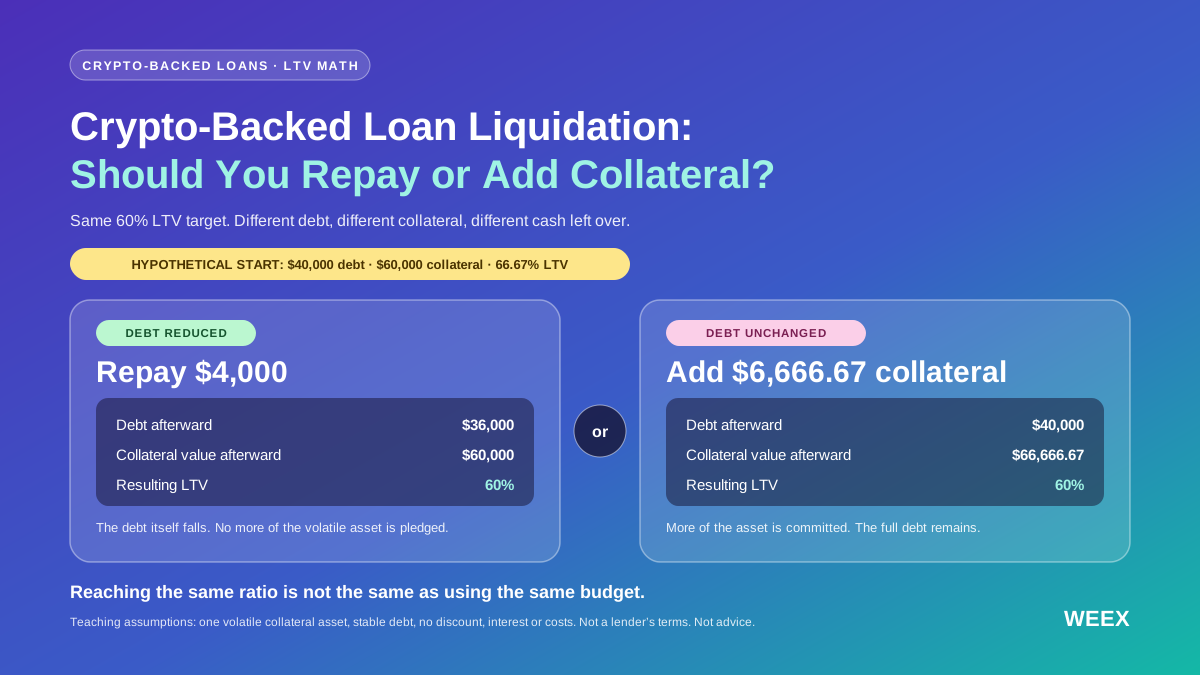
Crypto-Backed Loan Liquidation: Should You Repay or Add Collateral?
Facing crypto-backed loan liquidation? Compare repayment and collateral top-ups using equal budgets, LTV calculations, stress tests and protection limits.

Turbulent Middle Eastern Crypto Market Welcomes Leadership Change

Ritual Raises $30 Million to Launch Token: AI Game Changer or Retail Investor Trap?

Global Markets in the Last 24 Hours: Brent Oil Reaches $115.81, Bitcoin Drops to $79,818

The Mismatch Between Capital Frenzy and Deployment Economics in the Embodied Industry Clock Cycle
One Week Countdown to Midterm Elections! Will Crypto Change?

Bitcoin at $90,000: The $68 Million Bet on the U.S. Midterm Elections

BisonFi: How an Aggregator Captured Orders with Over $2 Billion in Weekly Trading Volume?

Anthropic IPO Filing Lifts AI Sentiment; BTC Holds Near $80,000 | WEEX TradFi Daily (October 27, 2026)
All three major indexes closed higher on October 26. Anthropic formally filed for a listing, rekindling AI speculation; the Philadelphia Semiconductor Index rose about 3% on the day, and Tesla reached a more-than-three-month high. Bitcoin was near $80,200, down for three consecutive weeks and testing $80,000 for a third time. Local assets plunged after the election result. The October 27 focus is the opening of the Federal Reserve meeting and earnings from Visa, PayPal and others.

WEEX Exclusive:Anthropic IPO Filing Lifts AI Sentiment; BTC Holds Near $80,000 | WEEX TradFi Daily (October 27, 2026)
How Optimism’s draft manual silently strips tokenholder elections

Tom Lee Did It Again. Bitmine Spent $24 Million on Ethereum, but Purchases Are Decreasing

Miden Partner Mainnet Launches, Plans Transition to Public Mainnet in Coming Months
Elon Musk's Grand Scheme to Undermine New Cloud Providers
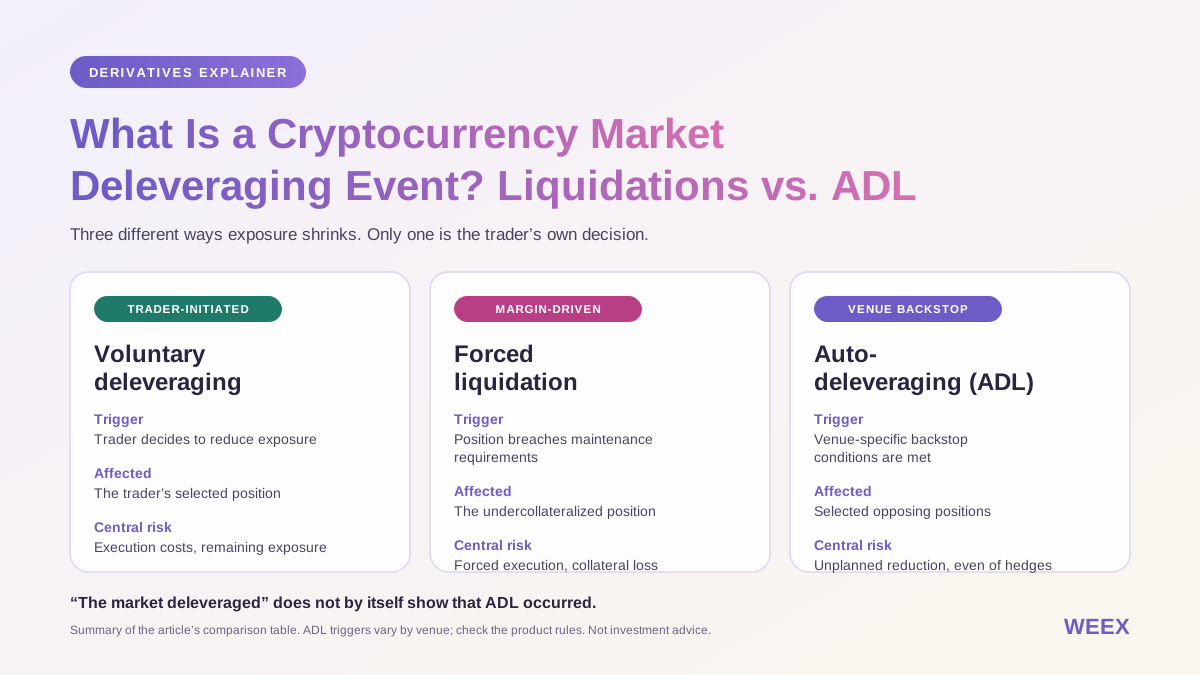
What Is a Cryptocurrency Market Deleveraging Event? Liquidations vs. ADL
Understand a cryptocurrency market deleveraging event: liquidation vs. ADL, misleading open-interest declines, hedge risks, and checks before trading.
Who Holds Tokenized Stocks? A Large Number of Retail Investors with Highly Concentrated Assets

Flash Loans Secure Two Governance Seats: What Does the X100 Theft Teach the Industry?

AI Reduces Vulnerability Discovery Costs, Crypto Industry Divided in Response

Real and Fake Cryptocurrency Market Makers: What Makes a Market Maker Legitimate?
Morpho RWA deposits pass $2B as loans approach $900 million
Key Institutional Prerequisite for Tokenization: Issuer Authorization
Kalshi Discusses User Protection Measures with Regulators, Willing to Raise Participation Age to 21
A New Wave of TGE? 19 Projects Expected to Launch Intensively in Q4
Reviewing the US, India, and South Korea: How Retail Investors Ignite the Options Market?
Looking Ahead to Tonight's Federal Reserve Meeting: A Pause in Rate Hikes in October is Almost Certain, How It Affects December Rate Hike Probabilities Becomes the Focus


