
Crypto: The French tax authorities could receive data from foreign platforms

 Prefer us on Google


The Senate has approved an agreement allowing the automatic exchange of information on cryptocurrencies held with foreign providers. This text does not create any new taxes, but it primarily gives the tax authorities the means to compare taxpayers' declarations with data received each year from their counterparts.
In brief
- The Senate has approved an agreement facilitating the automatic exchange of data on cryptocurrencies held abroad.
- The French tax authorities will receive information each year about taxpayers' accounts and transactions.
- This data will make it easier to identify undeclared accounts and tax inconsistencies.
- The first declarations are expected in 2027, as part of the European DAC8 framework.
- No new tax is planned. The system aims to strengthen controls but still needs final approval.
The tax authorities will receive data without prior control
The bill, adopted in first reading on October 27, allows France to approve the OECD's Crypto Reporting Framework. This agreement organizes the collection and then the exchange of information between the tax administrations of participating countries.
Until now, identifying a foreign crypto account largely depended on its declaration by the taxpayer or a targeted request from the tax authorities. The new system reverses this logic. Thus, information will be automatically reported, without an individual control being initiated first.
The concerned providers will have to transmit:
- The identity of the user and their tax residence;
- Their tax identification number;
- Conversions between cryptocurrencies and traditional currencies;
- Exchanges made between different cryptocurrencies;
- Transfers made to or from their accounts;
- The number, amount, and total value of transactions.
The data will be grouped by cryptocurrency and transaction category. They will then be exchanged annually between administrations, no later than nine months after the end of the relevant period.
The system will therefore not allow the French tax authorities to track every movement in real-time. Instead, it will provide an annual summary detailed enough to identify an unknown account, measure the volumes exchanged, and spot certain inconsistencies.
Declarations can be cross-checked on a large scale
The real change concerns the verification capacity. A French taxpayer must already declare certain crypto accounts opened, held, used, or closed abroad. They must also declare their taxable operations according to applicable tax rules.
However, the tax authorities had limited means to verify this information when the platform was located outside France. With the automatic exchange, they will be able to compare foreign data with declared accounts and the capital gains mentioned in the income declaration.
This comparison will not automatically prove fraud. A difference may arise from a transfer between two crypto wallets belonging to the same person, a non-taxable operation, or a different calculation method. However, it may trigger a request for explanation or an audit.
The rapporteur Emmanuel Capus clearly distinguished this cooperation from the tax rules themselves:
We are simply exchanging more information than we were already collecting.
The text therefore aims at detection capabilities, not the tax rate on gains. France has already transposed the European directive DAC8 into the finance law for 2025. Providers must collect information related to transactions made since January 1, 2026. The first declarations are expected in 2027.
The OECD agreement extends this logic beyond the European Union. However, its effectiveness will depend on the number of participating countries and the quality of the data provided by their platforms.
-- Price
The Senate Vote Does Not Add Any Tax and Still Needs to Be Finalized
The text adopted by the senators is not yet a law definitively enacted. It has been sent to the National Assembly as part of an expedited procedure. Parliament here authorizes the approval of two international agreements signed in Assumption on November 26, 2024.
No new levy is created. The rules determining the taxation of capital gains remain unchanged, as does the obligation to declare the relevant foreign accounts. The agreement mainly makes omissions easier to discover.
The system also retains limitations. It primarily depends on the information held by platforms and other providers subject to reporting obligations. A self-custodial wallet, where the user retains the keys, cannot directly transmit the identity of its owner. However, data may appear when a transfer goes through a regulated platform.
The concentration of sensitive information raises a security issue. Tax data will associate an identity with assets and transaction volumes. The Senate report specifies that France will require its partners to provide confidentiality guarantees and may refuse exchanges with jurisdictions that do not meet its protection standards.
For French holders, the main change will therefore not be a new tax in 2027. It will be the gradual disappearance of the informational advantage enjoyed by certain foreign accounts. The administration may know of their existence even before questioning the taxpayer.
This content is provided for general informational purposes only and doesn't constitute financial, investment, legal, or tax advice. Any events, rewards, online promotions, or related information mentioned herein should not be considered a recommendation, solicitation, or invitation to purchase, sell, trade, or otherwise deal in any crypto assets. Crypto assets are highly volatile and may result in loss. The availability of WEEX services, products, and related events may vary by region. You are responsible for ensuring that your participation is in accordance with applicable local laws and regulations.
You may also like

Bitcoin options show premium ahead of Fed decision

Why Third Parties Again? A Review of Coinbase's Supply Chain Risks and Defense Dilemmas

Ethereum’s $3 billion blockspace bet hinges on who gets to produce the next block

Crypto: USDC Overtakes USDT in the European Market

Challenges in Investigating Sources of Funds for Virtual Assets: Issues with Closed Exchanges and Personal Wallets

BlackRock and SBI Explore Yen Stablecoin Link for Tokenised Funds

Coinbase and Thunes Tie Stablecoins to Local Bank and Wallet Payouts

X100 governance flaws trigger $6M loss due to a flash loan

Bitget UEX Daily Report | Nasdaq Leads Tech Rally; Consumer Confidence Rebounds; Federal Reserve Decision Approaching (October 28, 2026)
Bitcoin: Small Holders Leave, Big Buyers Step In

Monad Wins a Stablecoin Card Infrastructure Deal With Reap and Meru

Social Media Shutdown: Senate Considers One-Hour Removal, Crypto Anti-Censorship on Alert
Fidelity: Fed deemed too lenient, bond yields at highest in 20 years
Interview: Erald Ghoos (OKX) on MiCA, the Dollar, and the Future of EU Payments
Why JPMorgan Raised the Target Price for Yushu Technology to 995 Yuan
Standard Chartered Launches RLUSD Custody, Plans Collateral Model

Solana Launches Delivery-Versus-Payment Tool for Atomic Securities Settlement

Solana Leads Euro Stablecoin Issuances: The Circle Effect Behind the Numbers

Bitcoin at $90,000: The $68 Million Bet on the U.S. Midterm Elections
Pump.fun 'optimized for addiction': what the internal messages cited in court really say

Rayls Bridges Traditional Finance and Decentralized Finance
The Week Ahead: 4 Key Moments for the Crypto Market
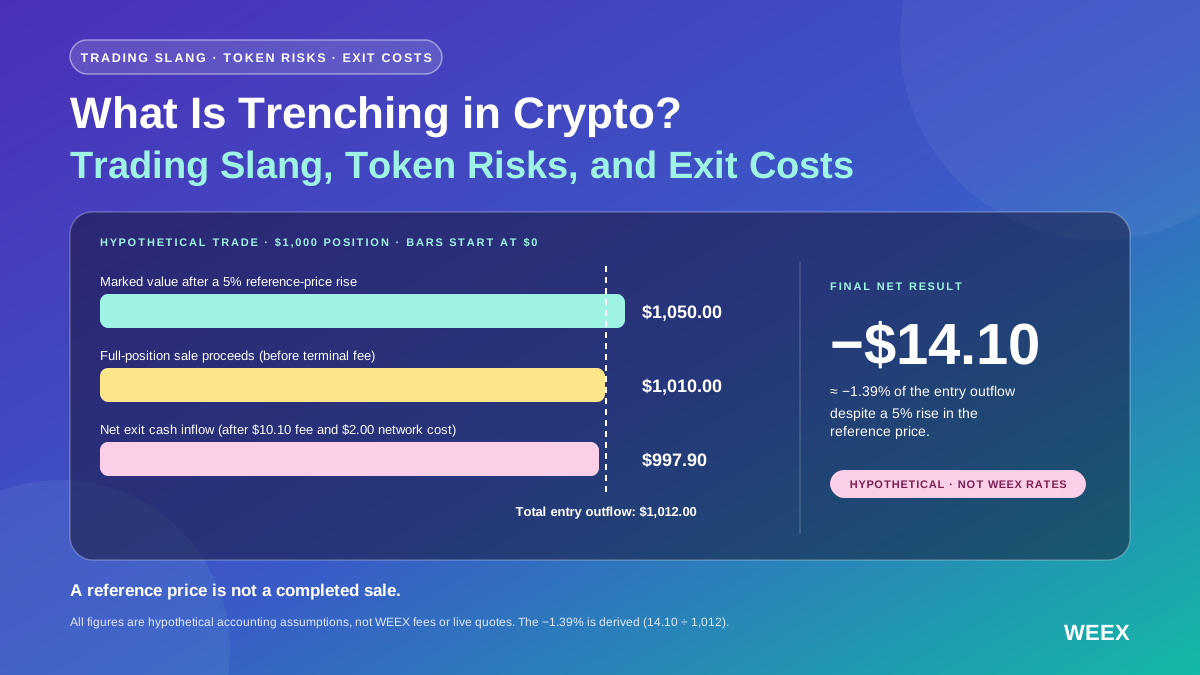
What Is Trenching in Crypto? Trading Slang, Token Risks, and Exit Costs
What is trenching in crypto? Learn the slang, token checks, liquidity risks, and how a rising token can still produce a loss after trading costs.
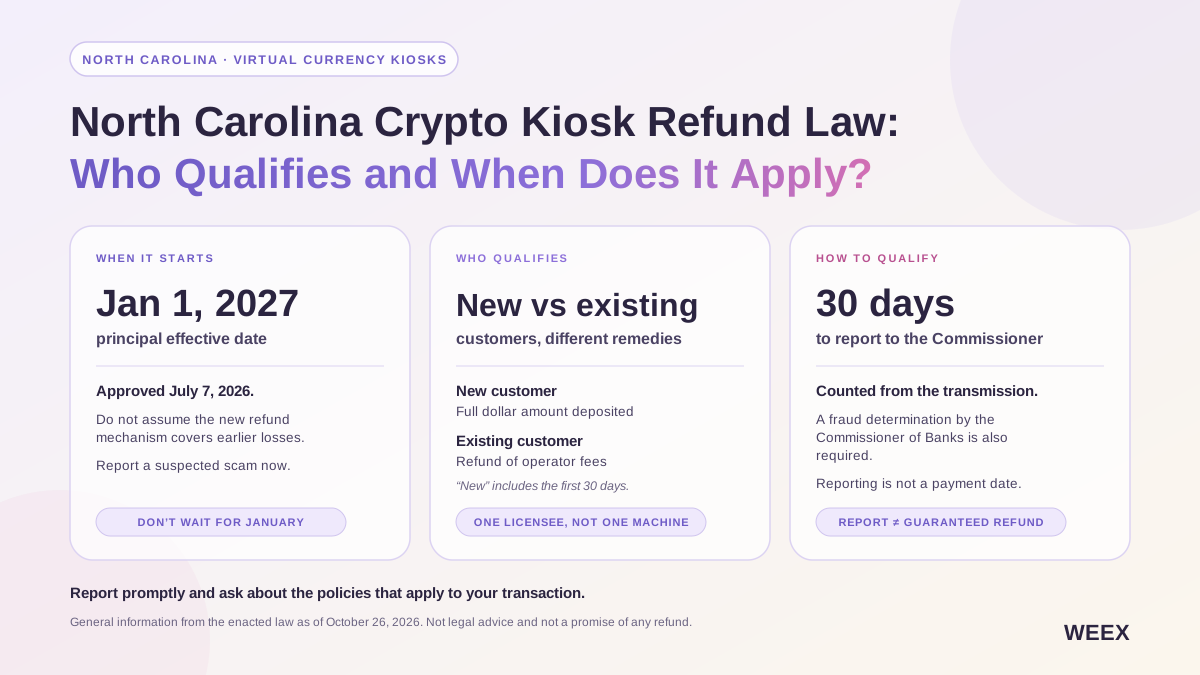
North Carolina Crypto Kiosk Refund Law: Who Qualifies and When Does It Apply?
Understand North Carolina’s crypto kiosk refund law: the January 2027 start date, who qualifies, reporting deadlines, and documents victims should keep.

[Bitcoin $0 Controversy②] "$0 is an Exaggeration"... Reasons Wall Street Disagrees
[ETH Letter] Meritz Securities Reviews Tokenization of Korean Securities Based on OP Stack

Progressive Party Opposes Further Delay of Cryptocurrency Income Tax

JPMorgan's Tokenized Fund on Solana: What MONY and JLTXX Mean for Institutional Adoption of RWA
Real and Fake Cryptocurrency Market Makers: What Makes a Market Maker Legitimate?
Michaël van de Poppe sees four crypto trends: AI, Ethereum, Sui, and digital assets
Bitcoin options show premium ahead of Fed decision
Why Third Parties Again? A Review of Coinbase's Supply Chain Risks and Defense Dilemmas
Ethereum’s $3 billion blockspace bet hinges on who gets to produce the next block
Crypto: USDC Overtakes USDT in the European Market
Challenges in Investigating Sources of Funds for Virtual Assets: Issues with Closed Exchanges and Personal Wallets
BlackRock and SBI Explore Yen Stablecoin Link for Tokenised Funds


