
NVIDIA Stock: What the $108B Q3 Guide Means for NVDA Next

 Prefer us on Google
NVIDIA stock closed at $224.41 on September 2, 2026, up 3.21% on the day and about 5% below its 52-week high of $236.54. The number that matters more than the quote is the one management put on the table on August 26: $108.0 billion in expected third-quarter revenue, plus or minus 2%, with zero Data Center compute revenue from China assumed. This piece breaks down the Q2 FY27 print behind that guide, what the forward multiple is really pricing, and the access problem most NVDA coverage skips — the stock trades roughly 32.5 hours a week while the news that moves it never stops.
Where NVIDIA stock stands after the Q2 FY27 print
NVIDIA reported second-quarter fiscal 2027 results on August 26, 2026, for the quarter ended July 26. Revenue came in at $96.221 billion, up 18% sequentially and 106% year over year. Data Center alone was $89.0 billion, up 117% year over year on the Blackwell Ultra ramp. GAAP earnings were $2.46 per diluted share; non-GAAP was $2.22. Gross margin, GAAP and non-GAAP, printed at 75.0%.
The market snapshot as of the September 2, 2026 close, per StockAnalysis:
- Market cap: $5.42 trillion; shares out 24.15 billion
- Trailing P/E 28.38, forward P/E 18.61
- Day's range $218.48–$227.95 on 157.1 million shares
- 52-week range $164.07–$236.54; beta 2.22
- Consensus of 60 analysts: Strong Buy, average price target $325.99 (+45.3%)
- Dividend $1.00 annualized (0.45% yield), ex-dividend September 10, 2026

Two things drove the September 2 move, and neither was a fundamental change at NVIDIA: Dell's strong quarter, read across as confirmation that AI infrastructure budgets are still expanding, and a Bloomberg report that NVIDIA is in advanced talks to acquire Hugging Face for roughly $14 billion. Neither is confirmed guidance. Treat the rally as sentiment repricing, not new company data.
What the $108 billion Q3 guide is actually telling you
The headline is growth. The interesting parts are two footnotes.
First, the guide excludes China entirely. Management said it assumes no Data Center compute revenue from China. That is a deliberate framing choice, and it cuts in NVIDIA's favor: any China contribution that does materialize is upside against a number that never counted it. Read the opposite way, it also tells you management is not willing to underwrite that line at all — a fair read of how unstable the export-control picture remains, especially with U.S. Commerce Secretary Howard Lutnick flagging on September 2 that semiconductor tariffs are coming.
Second, the margin guide steps down. Q3 gross margin is guided to 74.0% ±50 bps, against 75.0% delivered in Q2. That is a modest 100 basis points, but on roughly $108 billion of revenue it is real money, and it lands alongside GAAP operating expenses guided to about $9.2 billion, up from $8.408 billion in Q2. The revenue line is doing the heavy lifting; the cost line is starting to catch up.
Put the guide next to the multiple and the setup becomes clear. Trailing P/E of 28.38 versus forward P/E of 18.61 means the market is already spending the guided growth. NVIDIA does not have to miss for the stock to fall — it has to merely not beat by enough. That gap between 28 and 19 is where the risk lives, and it is why the shares can drop on a quarter that is objectively excellent.
Is NVIDIA stock a buy at a $5.4 trillion market cap?
No article can answer that for your portfolio, but the honest framing is this. The bull case is arithmetic: revenue of $302.97 billion on a trailing basis, up 83.4%, net income of $192.88 billion, and roughly $26.0 billion returned to shareholders through buybacks and dividends in a single quarter. A company generating that much cash at a forward 18.61x is not obviously expensive by conventional standards.
The bear case is concentration and expectation. Data Center is 92% of revenue, so NVIDIA is effectively one customer cohort's capex plan wearing a ticker. Analyst consensus is Strong Buy across all 60 covering analysts — near-unanimous ratings are a contrarian signal, not a confirmation, because it means positioning is already crowded and there is no marginal upgrade left to buy. VentureBeat reporting on September 2 that enterprise buyers now rank non-NVIDIA accelerators ahead of NVIDIA's own next-generation parts on evaluation lists is the kind of early competitive datapoint that does not show up in a quarterly print for two years.
The more useful conclusion: the near-term direction of NVIDIA stock is a function of the November quarter against a $108 billion bar, not of whether AI is real.
-- Price
NVDA trades 32.5 hours a week. Its news doesn't
Here is the structural problem almost no NVDA quote page addresses. The U.S. cash session runs 9:30 a.m. to 4:00 p.m. ET, five days a week — 32.5 hours out of 168, about 19% of the calendar. Nearly everything that has repriced NVIDIA recently landed outside it: the Q2 results at 2 p.m. Pacific after the close, the Hugging Face report, Jensen Huang's G20 comments, the Lutnick tariff remarks. The after-hours quote of $225.35 on September 2 versus the $224.41 close is that gap in miniature.
If you sit outside the U.S., the problem compounds. A 4:20 p.m. ET headline is 4:20 a.m. in Singapore, and a traditional brokerage account leaves you holding a position you cannot adjust until the next session opens. Weekend news is worse — two full days of accumulated information discharged into a single Monday open.
That is the gap tokenized equity products exist to close. It is also where the risk of confusing two different instruments starts.
How to trade NVDA on WEEX: spot tokens vs perpetuals
WEEX offers two distinct NVDA routes, and the difference is not cosmetic.
- Tokenized spot. The NVDA-USDT stock page tracks NVIDIA Corporation's price and settles in USDT, quoting $225.35 as of September 3, 2026 — in line with the U.S. after-hours mark. It is long-only, fractional, and does not require a U.S. brokerage account. You are holding price exposure, not registered shares: no voting rights, and dividend and corporate-action treatment follows the product terms, not the equity's.
- Perpetual futures. The NVDAUSDT perpetual contract works like a crypto perp with an equity underlying — long or short, margin-based, funded continuously, settled in USDT with no share delivery. This is where leverage and funding costs enter, and where most account damage happens.
Before using either, check the live parameters on the page itself rather than trusting a number in an article: maximum leverage, margin tier, funding interval, and the fee schedule change, and a stale figure is worse than none.
What usually goes wrong with leveraged NVDA positions
Experienced desks watch three things on stock perps that beginners discover the hard way.
Funding drift. A perpetual holds its peg through funding payments. Carrying a long through a crowded, persistently positive-funding stretch bleeds the position even when the price goes nowhere. On a name as consensus-long as NVDA, that is the base case, not the exception.
Beta stacking. NVDA's beta is 2.22 — it already moves roughly twice the market. Applying 10x to a 2.22-beta underlying is not 10x risk; it behaves closer to 20x relative to the index. The liquidation math that feels comfortable on a low-beta name is not the same math here.
The gap you cannot trade through. Continuous products track a reference that itself gaps at the U.S. open. An earnings print or an acquisition headline can move the mark violently in thin off-hours liquidity, and stop orders fill where the book is, not where you set them. November 2026, when the next quarterly report lands against that $108 billion bar, is the date to have this sorted before, not during.
The practical version: size for the gap, not for the average day.
The bottom line on NVIDIA stock
NVIDIA stock is not currently a debate about whether AI demand is real — the $89.0 billion Data Center quarter settled that. It is a debate about whether $108 billion is beatable enough, at a 74% margin, to justify a $5.42 trillion market cap that already discounts the guide. The China exclusion is a free option; the margin step-down and the opex ramp are the line items to watch in November.
For traders who want NVDA exposure that stays open when the news does, WEEX's tokenized NVDA spot and NVDAUSDT perpetual both run continuously, including weekends. Check the live contract parameters and fee schedule on the trading page before sizing anything, and decide first whether you want directional exposure or leverage — they are not the same product.
FAQ
1. What is NVIDIA stock trading at right now?
NVDA closed at $224.41 on September 2, 2026, up 3.21%, with an after-hours mark of $225.35. Its 52-week range is $164.07–$236.54. Quotes move constantly — check a live source before acting on any figure in an article.
2. Why did NVIDIA stock rise on September 2, 2026?
Two catalysts, neither from NVIDIA's own reporting: Dell's stronger-than-expected quarter, which analysts read as validation that AI infrastructure spending is still expanding, and a Bloomberg report that NVIDIA is in advanced talks to buy Hugging Face for around $14 billion.
3. When is NVIDIA's next earnings report?
NVIDIA reported Q2 fiscal 2027 on August 26, 2026. The third-quarter report is expected in November 2026, and the guide it will be measured against is $108.0 billion in revenue, ±2%, at a 74.0% gross margin.
4. Can you buy NVIDIA stock 24/7?
Not as a registered share — the Nasdaq cash session covers about 32.5 hours a week. Tokenized stock products and stock perpetual futures on crypto exchanges track NVDA's price continuously, including weekends, but they give you price exposure rather than share ownership.
5. What is the difference between a tokenized NVDA stock and an NVDA perpetual?
A tokenized stock is long-only spot exposure that tracks the share price and settles in USDT. A perpetual futures contract is a margined derivative that can be traded long or short, carries funding payments, and can be liquidated. The perp adds leverage; the token does not.
Risk Warning
Trading NVIDIA-linked products carries substantial risk and can result in partial or total loss of capital. NVDA has a beta of 2.22 and has moved through a $164.07–$236.54 range over the past 52 weeks; a single earnings print against a $108 billion guide can reprice it sharply. Tokenized stock tokens are not registered equity — you hold price exposure, not shares, with no voting rights and product-specific treatment of dividends and corporate actions, plus counterparty and custody risk tied to the issuer and venue. Perpetual futures add leverage, funding costs, and liquidation risk, and off-hours liquidity can be thin enough that stops fill far from their trigger. Availability of tokenized equity products varies by jurisdiction and is subject to change. Never commit capital you cannot afford to lose, and confirm live contract parameters, fees, and eligibility on the trading page before entering a position.
This content is provided for general informational purposes only and doesn't constitute financial, investment, legal, or tax advice. Any events, rewards, online promotions, or related information mentioned herein should not be considered a recommendation, solicitation, or invitation to purchase, sell, trade, or otherwise deal in any crypto assets. Crypto assets are highly volatile and may result in loss. The availability of WEEX services, products, and related events may vary by region. You are responsible for ensuring that your participation is in accordance with applicable local laws and regulations.
You may also like
CRWV Stock Swings From -9.5% to +5.9%: Why CoreWeave Reversed

ETH Staking on WEEX vs On-Chain: Queues, Minimums, and Keys
Crypto Liquidation Price: How to Calculate It From 5x to 50x
PEP Earnings: PepsiCo Beats Q3, Cuts Guidance on North America
How Quant Trading Platforms and Bots Can Build With WEEX Broker

WIF and POPCAT Price Rally: Can the Solana Meme Rotation Hold?
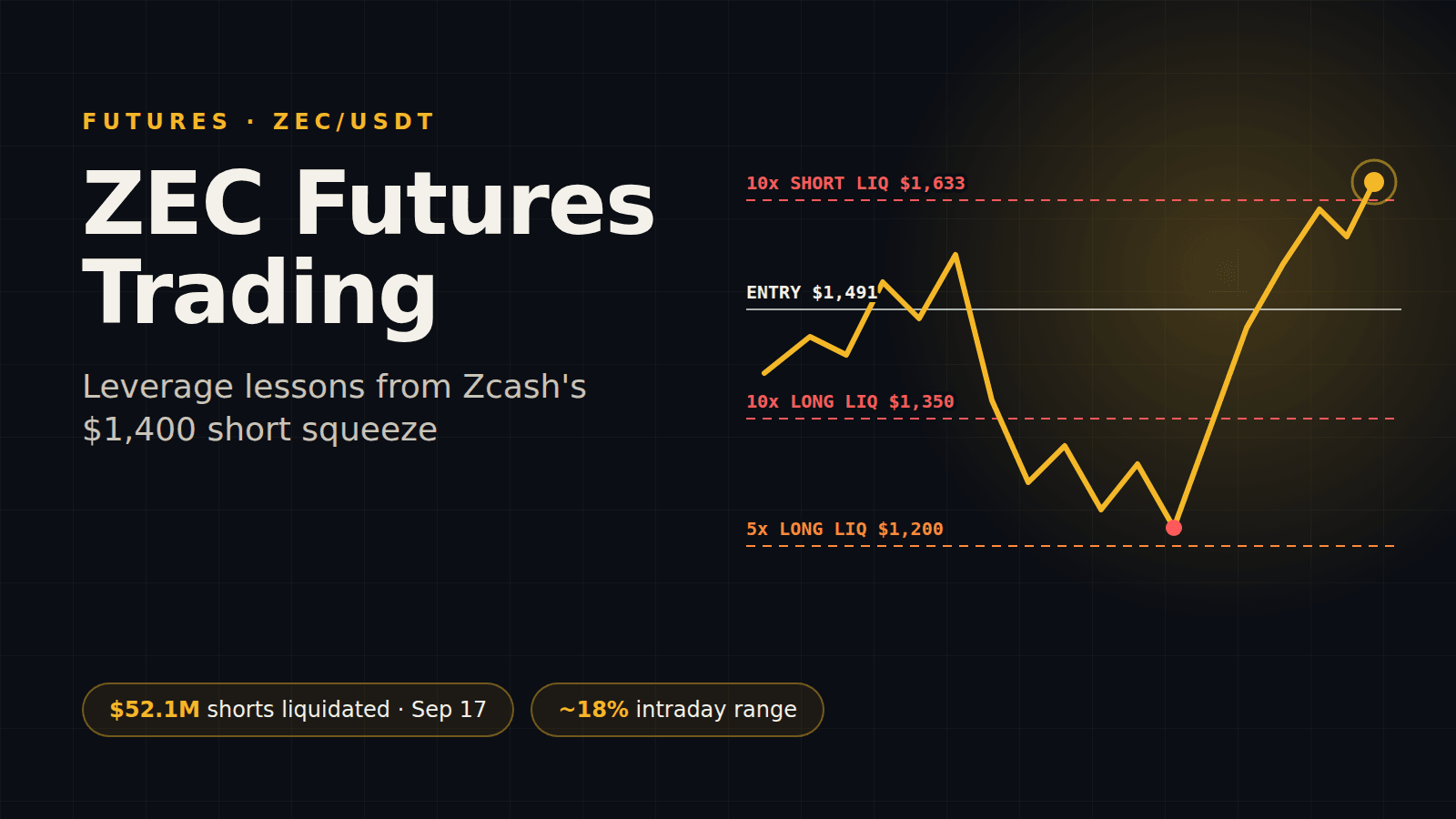
ZEC Futures Trading: Leverage Lessons From Zcash's $1,400 Squeeze
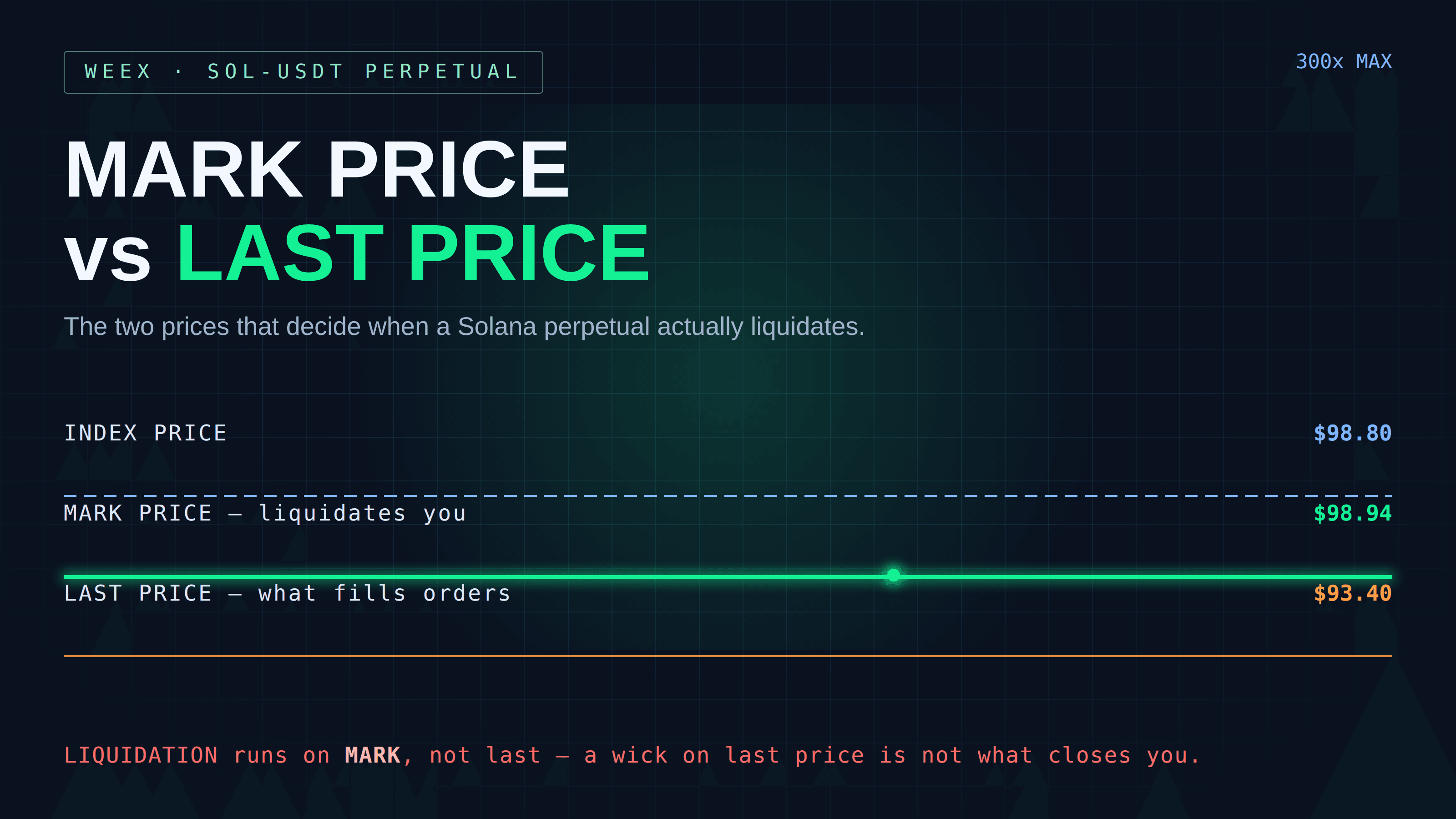
SOL Perpetual Contracts: Mark Price, Index Price and Liquidation
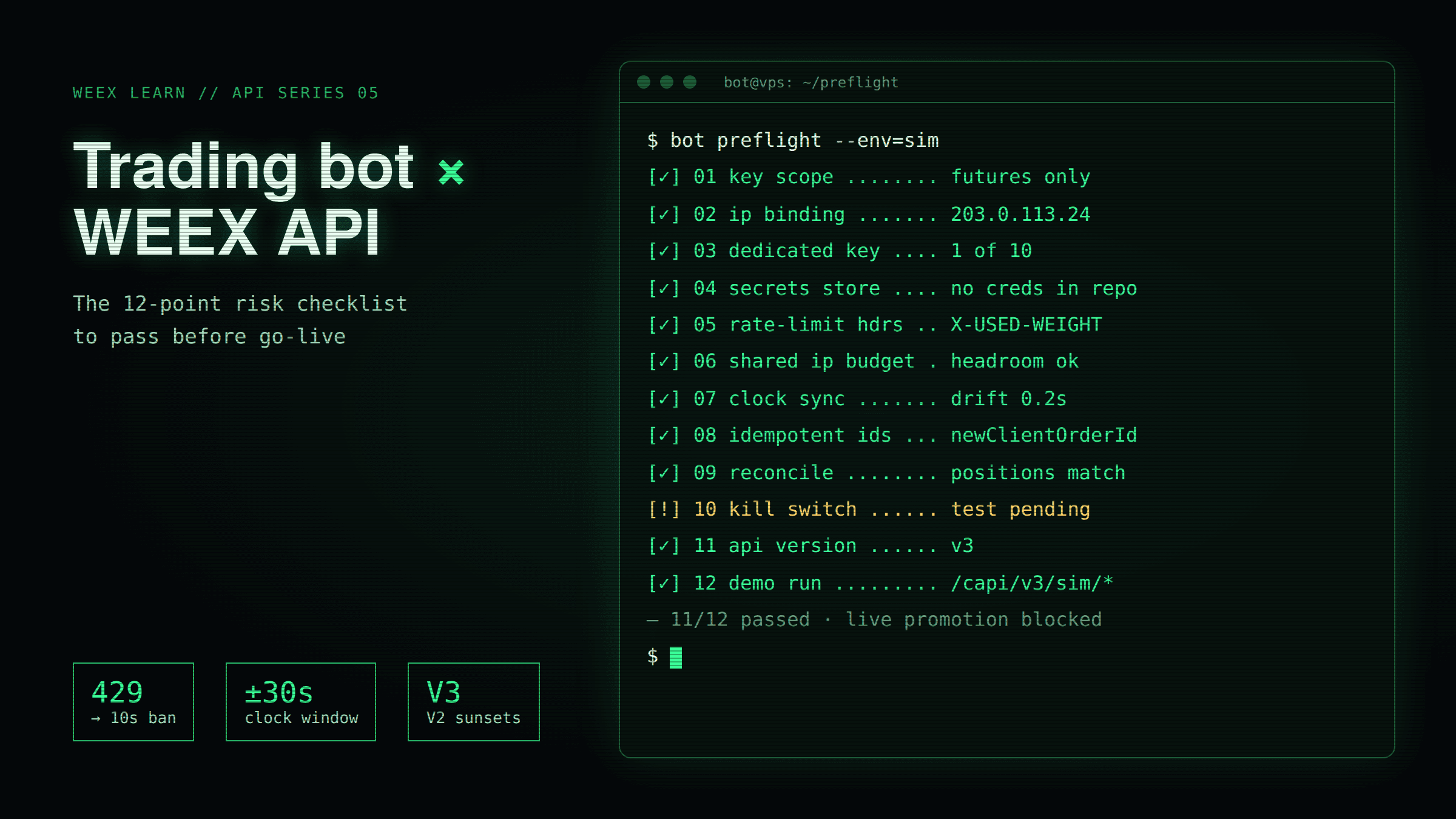
Connecting a Trading Bot to WEEX API: The 12-Point Risk Checklist
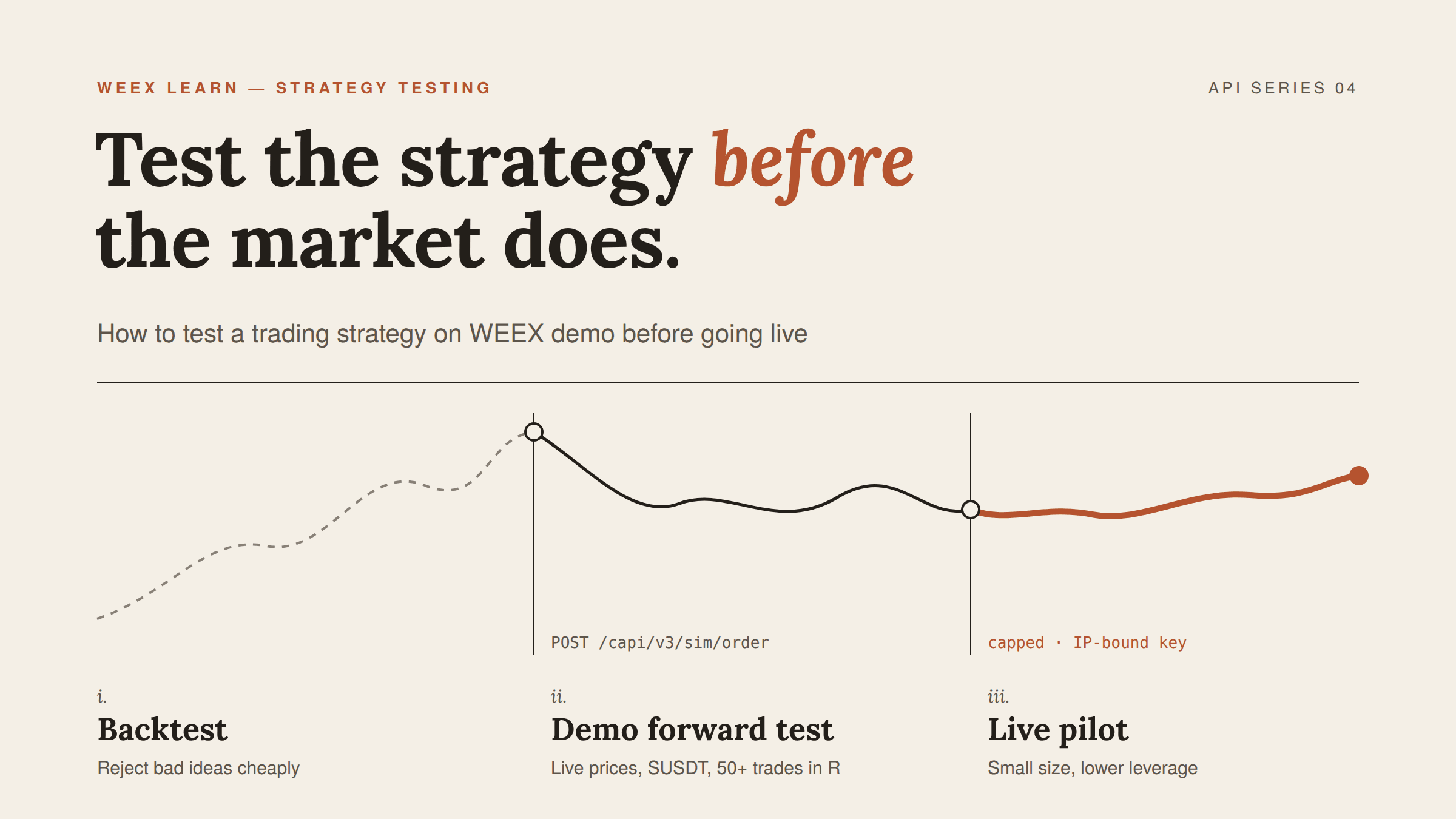
How to Test a Trading Strategy on WEEX Demo Before Going Live
Palantir Stock 24/7: How PLTR Perpetual Futures Really Price
Oracle Stock Futures After Earnings: How Leverage Got Liquidated
AVAV Stock Futures: How to Trade AeroVironment With Leverage

Hunter Biden's LAPTOP Memecoin: What TRUMP's Trajectory Suggests Could Happen Next

Cathie Wood Robinhood Stock: What Her 2026 Trades Really Show
Nike S&P 100 Exit: What the Removal Means for NKE Holders

Nike Stock Price Prediction 2026: What the $50 Target Actually Requires to Happen

AAPL Under Ternus: What Apple's CEO Change Means for Traders
PEP Stock Analysis: Why PEPon Trades Above PepsiCo Shares
CRMON After Salesforce's 23% Post-Earnings Surge: The Catch

PKR to USDT Rate: How to Spot a Bad P2P Spread in Pakistan

SOXSB Explained: Why the 3x Chip Bear ETF Resets Without You
Is WMT Stock a Buy After Falling 23% From Its 52-Week High? What the $137 Analyst Target Actually Implies

XRP ETFs Have Pulled Nearly 1 Billion Tokens off the Market: Why the Price Keeps Sliding Anyway
JPMorgan Says Buy the Chip Dip but Morgan Stanley Says Sell: What the SOXL Analyst Disagreement Actually Means
Bitcoin's $2.7 Billion Short Squeeze: What Triggered the Largest Liquidation Event of August 2026

Crypto Exchange API: Permissions, Signing and Rate Limits
QQQB and the Fed: What the FOMC Minutes Mean for Nasdaq-100

SK Hynix Stock Is Down 35% in July: Is the Worst Finally Over?
CRWV Stock Swings From -9.5% to +5.9%: Why CoreWeave Reversed
ETH Staking on WEEX vs On-Chain: Queues, Minimums, and Keys
Crypto Liquidation Price: How to Calculate It From 5x to 50x
PEP Earnings: PepsiCo Beats Q3, Cuts Guidance on North America
How Quant Trading Platforms and Bots Can Build With WEEX Broker
WIF and POPCAT Price Rally: Can the Solana Meme Rotation Hold?
Contents
Popular coins
Latest articles


