
Tether Now Has Two Stablecoins; USAT Targets the U.S. Market While USDT Remains Global

 Prefer us on Google

Tether, the company behind the world's largest stablecoin, is facing a problem that few people notice. Its flagship token, USDT, which has a market value of about $180 billion according to CoinGecko, does not comply with the new regulatory frameworks in the United States.
According to Mihan Blockchain, instead of changing its giant to comply with these regulations, Tether made a smarter move by building a second stablecoin from scratch that is exclusively designed for the United States. Today, this new token took a step forward that shows how serious Tether is about it.
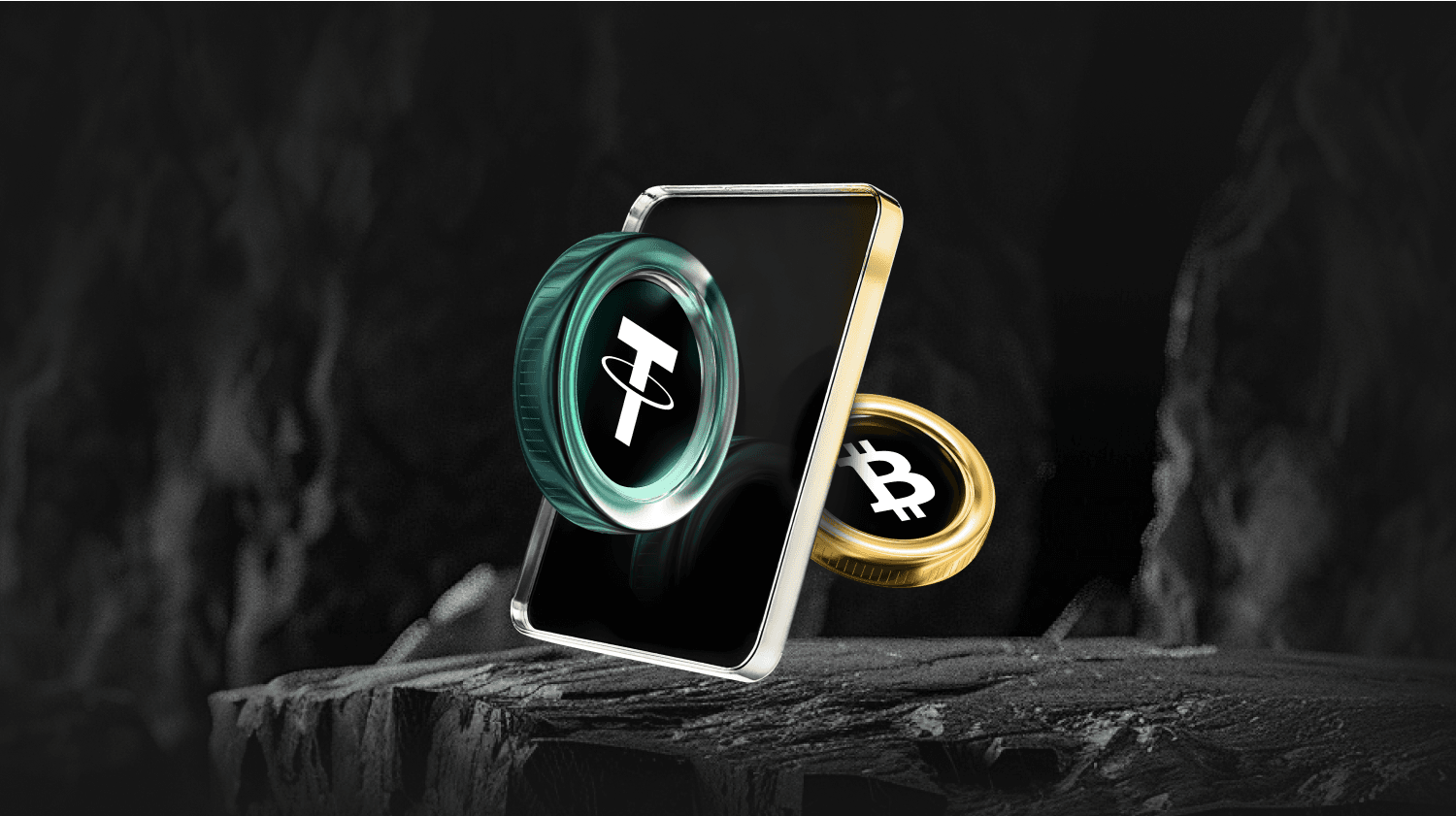
The USAT token (U.S. compliant stablecoin) has recently expanded on a new blockchain. On the surface, this is just a technical detail, but behind it lies a massive strategy, namely the "Two-Coin" approach.
What happened to USAT?
The USAT token was launched on the Celo network (a network specifically built for stablecoin payments). This event makes Celo the second blockchain to host this token, following its initial launch on the Ethereum network in January 2026. This choice is by no means accidental. According to data from Celo and The Block published on July 29, 2026, the Celo network processes about 28% of all cross-chain transactions of the USDT token, making it a natural distribution channel. Additionally, on Celo, thanks to a native technical feature, USAT can be used directly for transaction fee payments without the need to hold a separate token for gas.

The key point is not just this single integration; it sends a message: Tether is actively building the infrastructure for USAT. This is not a project that was initiated in January and then abandoned; the company is investing in it.
Breaking News: USAₜ is now live on Celo!
The U.S. dollar-backed stablecoin issued by Anchorage@ and supported by Tether@ has been established on Celo (the most widely used network for stablecoin payments) --- along with support for minting, burning, and using it as gas currency from day one.
Why Celo and how to get USAₜ ↓pic.twitter.com/KiIgpoCM7B
--- Celo (@Celo) July 29, 2026
Two-Coin Strategy
To understand the significance of this, one must see the bigger picture. Tether is now playing two separate games with two different products.
Comparison of Tether's Two Stablecoins
| Feature | USDT (Flagship Token) | USAT (Regulatory Compliant Token) |
|---|---|---|
| Market Value | Approximately $180 billion | Approximately $185 million |
| Status and Target Market | Global dominance across emerging markets, but outside the U.S. regulatory compliance framework. | Small but specifically designed for the GENIUS law and issued by a federally licensed bank in the U.S. |
This contradiction represents everything. USDT is a giant that dominates global markets, but since its reserves are still not fully aligned with U.S. regulatory standards, it cannot operate as a fully licensed stablecoin within the U.S. USAT is a product born specifically for that market: today, it is small with $185 million compared to $180 billion of USDT, but it is designed from the ground up to be compliant with regulations. Tether decided not to choose between the world and the United States; instead, it kept both.
Who issues USAT and why it matters
There is an aspect of USAT that differentiates it from anything Tether has done before, and this is the most important detail for understanding the significance of this token. USAT is not issued directly by Tether but by Anchorage Digital Bank; the first federally chartered bank in the U.S. dedicated to cryptocurrency assets and operating under the supervision of the Office of the Comptroller of the Currency (OCC). The custody of the reserves is also handled by Cantor Fitzgerald, one of the oldest institutions on Wall Street.
In practice, Tether accepted to place its American stablecoin within the strictest regulatory framework, namely issuance by a regulated bank and custody by a traditional financial power. For a company that has historically faced criticism over the transparency of its reserves, this is a significant shift in position. The leadership of this operation is under Bo Hines, the former director of the White House Crypto Council, who was specifically chosen to speak the language of Washington.
-- Price
Why Celo?
This integration does not start from scratch; rather, it leverages an ecosystem that has previously been built around stablecoin payments:
- 28%: Celo's share of all cross-chain USDT transactions (based on data from Celo and The Block in July 2026).
- +18 million: The number of global users of the MiniPay wallet (the Opera wallet built on Celo).
- 1 token: The USAT token can be directly used for paying gas fees on the Celo network.
Why now?
This timing is very calculated. The implementing regulations of the GENIUS Act are still evolving, but the path is clear: the U.S. market will reward compliant stablecoins and leave the rest behind. Tether is getting ahead before the legal deadline and is creating the right product before the window of opportunity closes.
This is the calculation that has moved large companies like Fidelity and other heavyweight institutions. The battleground for stablecoins is no longer just about technology or transaction volume; it is about compliance. Anyone who holds the appropriate licenses to operate in the United States will claim the most lucrative market in the world. USDT remains the global king, but on U.S. soil, USAT could be the heir to the throne.
The Bigger Picture for Stablecoin Sector
This move signifies a maturity resonating throughout the industry. For years, Tether thrived by operating in regulatory gray areas and ventured into spaces that were beyond oversight. The creation of USAT is an implicit acknowledgment that this model, on its own, is insufficient for what lies ahead. The market that truly matters, namely the institutional market in the United States, can only be accessed with fully legal credentials.
The strategy of two coins is the clearest summary of this particular moment in the history of stablecoins: one foot in the old world of borderless, permissionless existence where Tether was born and still dominates, and one foot in the new regulated and lawful world where the future is being shaped. The fact that a company most aligned with the culture of "old crypto" is meticulously crafting its compliant version could be the strongest signal of the direction in which the entire sector is moving. Readers who wish to understand the regulations that are changing this market can start with our guide on the GENIUS law. Official information is also still available through Tether's official channels.
This content is provided for general informational purposes only and doesn't constitute financial, investment, legal, or tax advice. Any events, rewards, online promotions, or related information mentioned herein should not be considered a recommendation, solicitation, or invitation to purchase, sell, trade, or otherwise deal in any crypto assets. Crypto assets are highly volatile and may result in loss. The availability of WEEX services, products, and related events may vary by region. You are responsible for ensuring that your participation is in accordance with applicable local laws and regulations.
You may also like

Wall Street's $359 billion-a-day repo market has found a use for blockchain

JPMorgan Now Offers Two Tokenized Money Market Funds on Solana

Overview of Cryptocurrency Asset Regulation Series (11): South Africa, From FSCA License to Cross-Border Reporting

Ethereum staking yield is losing to cash rates, so why are investors still lining up?

Turning Speculation into Business: Standard Reserve's Stock Liquidity Experiment

AI Security 'Black October'... "The Era of Hacking for Everyone Has Arrived"

Grok, ChatGPT, Claude: These AIs Trading Your Crypto While Banks Panic
Weekly Highlights | Gold Drops Below $4000 During Golden Week, a16z Crypto Renamed to a16z Frontier
Circle Shareholders and Sun Yuchen File Lawsuits Amid Ongoing Controversy Over Trump's Family Crypto Business WLFI

Fraud in Spain Reveals Money Laundering with Cryptocurrencies
The GENIUS Act Leaves Loopholes, Banks Warn of Potential $850 Billion Loan Shrinkage

AI and Chips: Washington Tightens the Noose on American Investments in China

Etherscan launches beta tool to detect address poisoning scams
How Has BTC Performed After Four Historical Midterm Elections?
$1.2 Billion in Trading Volume Over 5 Days, TVL Only $11 Million: Why Metric is Worth Watching?

The Past of Prince Group: $15 Billion in Bitcoin Frozen on the Chain

Tether Releases Voice Recognition Model for Local Use on Mobile and PC

Robinhood Chain Earns $51 Million in Fees in Three Months, While Ethereum Only Receives $69,000?

Ethereum Delays Test of Glamsterdam Update

Why Does the Crypto Market Still Need Options After Perpetual Contracts?

How to Reconstruct an Enterprise-Level AI Data Platform When Data Moves Towards Understanding?
Do Agents Really Need Blockchain Payments?

Is Predictive Market Really Useful Beyond Betting?

"Everyone has blown up"... A hundred traders, two liquidations on the same trade!
Former FTX Executive Slams Netflix's New Series: Turning Financial Fraud into a 'Romantic Film' is Absurd
RedStone Launches New FIL Price Feed on Filecoin for Apps
Closed DeFi Protocol: What Can Still Be Recovered

Bitcoin: According to Michael Saylor, it is better to hold it than to use it for purchases

Solana bot turns just $12,000 into $1.4 billion in trading volume as fake liquidity floods Raydium
Robinhood Wins Dubai License For Bitcoin, Stock Trading
Wall Street's $359 billion-a-day repo market has found a use for blockchain
JPMorgan Now Offers Two Tokenized Money Market Funds on Solana
Overview of Cryptocurrency Asset Regulation Series (11): South Africa, From FSCA License to Cross-Border Reporting
Ethereum staking yield is losing to cash rates, so why are investors still lining up?
Turning Speculation into Business: Standard Reserve's Stock Liquidity Experiment
AI Security 'Black October'... "The Era of Hacking for Everyone Has Arrived"





